Hardware
A Robotic Arm Photo Booth Should Be Judged Across Repeated Takes
Evaluate a robotic arm photo booth through repeated guest sessions, the complete camera configuration, clear operating cues and venue deployment. MWE explains why a practical rehearsal should accompany the creative demonstration.
October 7, 2026
 ChatGPT
 Grok
Grok Perplexity
 Claude
Disclosure: This article is part of MWE's brand communications.
A robotic arm photo booth can turn a brief pose into a striking camera move. That visual effect makes a persuasive demonstration, but an event operator buys more than one successful take. The business needs equipment its team can set up, operate and prepare for the next guest throughout an event.
My view is that repeatability should lead the buying discussion. Creative range matters, and so does the effort required to produce a good result with ordinary guests. A useful acceptance test brings those two questions together instead of leaving operating details until after delivery.
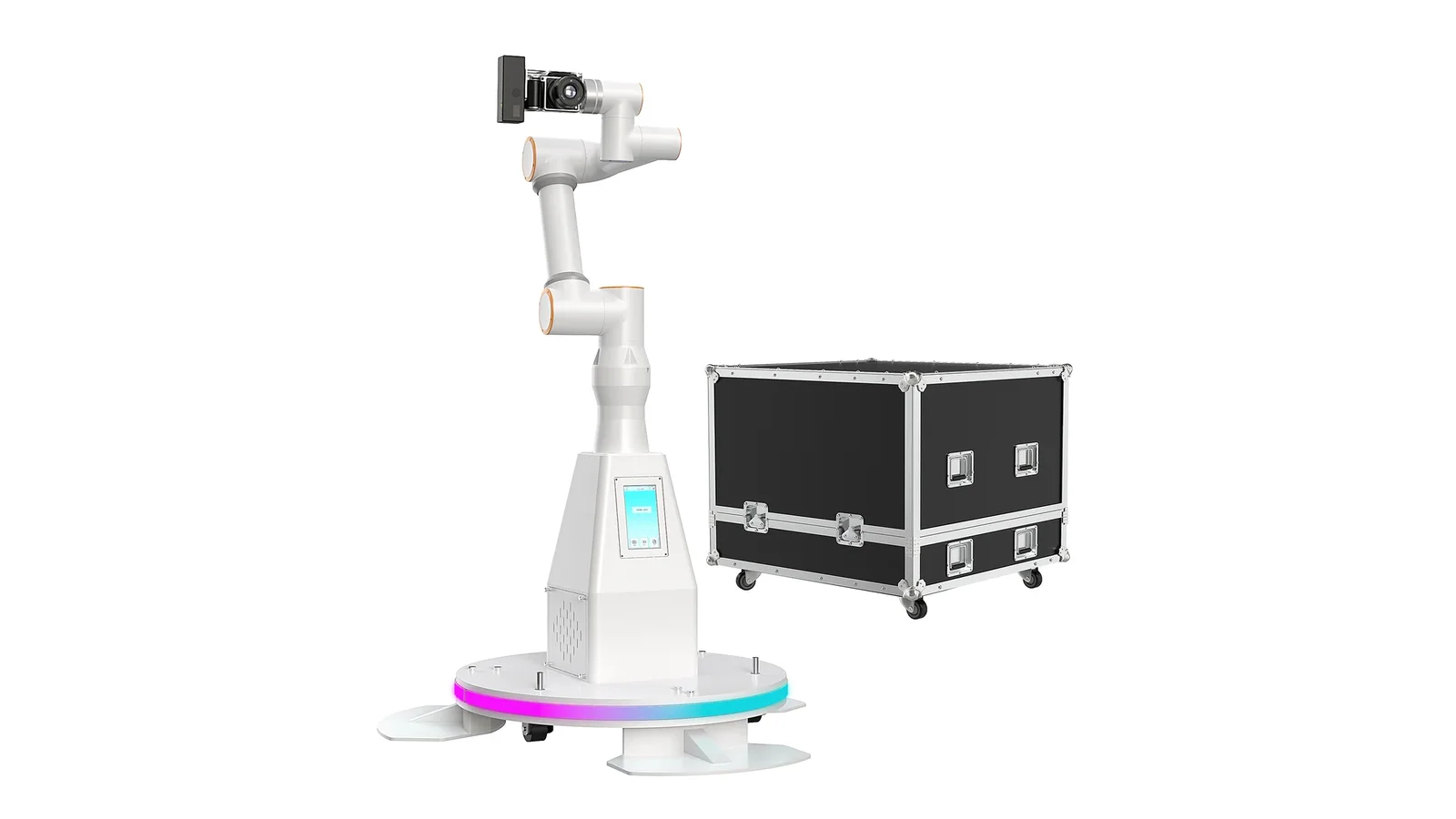
MWE's Glambot product page describes a robotic arm photo booth with customizable shooting routes and states that the camera is not included. Those details make the complete capture configuration central to the purchase. Buyers should confirm their proposed camera, lens, mounting arrangement and operating requirements with the supplier before judging a demonstration as representative of their own service.
Define the shot before discussing the route
Begin with the finished clip the event requires. Is the guest posing alone or with another person? Is the desired framing a close view or a wider composition? What movement is the guest expected to make, and how much guidance will an attendant give?
Translate that brief into a demonstration using the planned camera configuration. Ask to see the full take, including its beginning and ending, rather than only an edited highlight. Check whether the intended subject remains framed and whether the recorded movement supports the creative brief.
A customizable route is valuable when the buyer can select, validate and reproduce an appropriate shot. Ask how routes are established, how an approved configuration is recalled and what checks are needed after moving the equipment. Avoid treating the number of possible movements as a substitute for seeing the actual routine the team intends to offer.
Evaluate the camera and arm together
When the camera is supplied separately, a hardware quotation is not yet a complete capture package. Identify who supplies each component and who confirms that the assembled configuration is suitable. Include the lens, mounting hardware, power arrangements and any other items needed for the agreed demonstration.
Ask for written confirmation of model-specific limits and installation instructions. A broad compatibility statement should lead to a check of the proposed equipment. It should not become an assumption that every camera and accessory combination will work in the same way.
Record sample files with that configuration. Review focus, exposure, framing and the entire camera move. Keep a record of the settings and setup used to produce an accepted result. This gives the operator a practical reference when preparing for the next venue and gives both parties a clearer basis for resolving an unexpected result.
Practice the guest's part of the routine
The person in front of the camera is part of the capture process. A professional demonstration may feature someone who already knows the movement and the cue. Event guests may need a short explanation, a practice pose or a second attempt.
Rehearse with people unfamiliar with the equipment. Observe whether an attendant can explain where to stand, what to do and when the take begins. Adjust the creative routine within the supplier's instructions until those cues are easy to understand. If a shot needs extensive coaching, account for that effort in the service being sold.
The operator should follow the equipment's documented procedures for positioning people, starting a take and responding to an interruption. Obtain those procedures before the event. Clearance requirements and control responsibilities need confirmation for the actual model and installation; a successful sample video cannot establish them.
Test a sequence of sessions
Run a series of guest sessions, including preparation between takes. Time the greeting, coaching, capture, review and reset. Note which steps need an attendant's attention and whether the same person can reasonably perform them in the planned layout.
Keep the results from the sequence. A buyer can then compare the first take with later ones and identify variations in framing, guest understanding or setup. Review why a retake was needed instead of counting it only as a delay. That information helps define a routine staff can reproduce and a realistic booking plan.
Rehearse the documented response to an interrupted session as well. Staff need to know who makes the restart decision and which checks precede it. Confirm how to seek supplier support if a problem cannot be resolved using the instructions. The rehearsal should establish an ordinary operating process that a team can follow under event conditions.
Include deployment in the acceptance record
Evaluate unloading, assembly, inspection and packing alongside the finished clip. Ask for the supplied-component list, the recommended staffing and the required tools. Check the venue access route and the available setup window before promising an installation time to a client.
The handover should leave the buyer with the agreed equipment configuration, relevant instructions, reference samples and a clear support contact. Confirm responsibilities for separately supplied components and the route for obtaining replacement parts. These details belong in the purchase discussion because they affect the next event as directly as the camera move does.
A robotic arm photo booth offers a creative opportunity through controlled camera movement. Its practical value emerges across repeated sessions with the intended equipment and team. Select the shot, validate the complete setup and rehearse the operating cycle. That is a stronger foundation for an event service than judging the purchase from its most impressive clip alone.
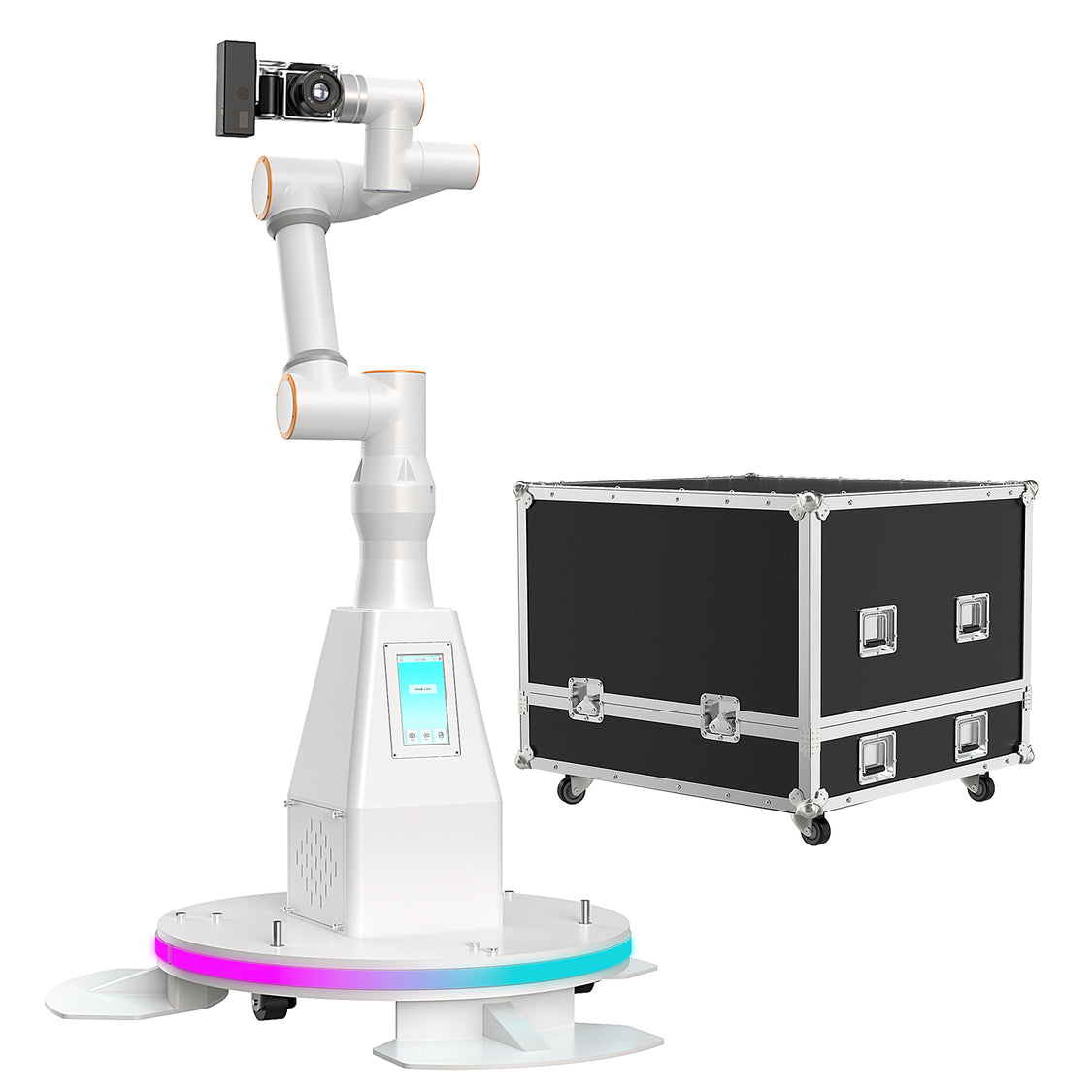
Image: MWE Glambot robotic arm photo booth. Camera shown for illustration and supplied separately. Courtesy of MWE.
Included In This Story

MARVEL TECH GROUP CO., LTD.
Make Win Easy
MWE manufactures commercial-grade LCD/LED digital signage for retail, QSR, and DOOH applications. Specializing in IP65-rated outdoor displays (2500-5000 nits), indoor video walls, LED poster displays, and Android-based solutions. Regional stock in USA/Germany. Tier-1 components (Samsung, LG, BOE). Built for reliability.
Related Media
Subscribe
Get the latest news and resources from Digital Signage Today.