Retail
Fitness Cartel pumps up digital signage strategy
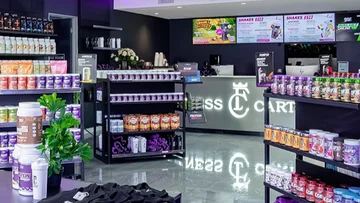
Fitness Cartel has rolled out the Fusion Signage digital signage software solution across its network, and now has a more scalable, flexible and commercially effective way to manage screen-based communications across gyms, clubs and wellness locations.
November 20, 2026 by Judy Mottl — Editor: RetailCustomerExperience.com & DigitalSignageToday.com, Connect Media
 ChatGPT
 Grok
 Perplexity
 Claude
The road to improved digital signage at Fitness Cartel didn't start at the typical starting point of most enterprises — assessing digital signage to better engage, communicate and inform clients.
It came back channel when the Australian fitness chain decided to change up AV services and quickly learned that its initial digital signage system wasn't as effective as it should be as it was tied to a specific TV and display manufacturer. It was a limited setup and the brand had little to no options when choosing signage displays. It was also proving harder to manage.
AV enhancement leads to digital signage enhancement
The brand had initially reached out to Ampd Electronics for needed AV improvements. Ampd Electronics then presented a range of improved digital signage scenarios, featuring Fusion Signage technology, that demonstrated long-term cost benefits and operational advantages given it has a more open and scalable platform.
In switching over to Fusion Signage the brand now has a more flexible and commercially efficient way to manage screen-based communications across its gyms, clubs and wellness locations.
Right approach at the right time
Fitness Cartel is a destination for fitness, wellness, recovery and community. Founded by Nathan James and TJ Groot in 2020, it is one of Australia's and New Zealand's independent health club brands. It has more than 60,000 members across 20 locations and employs over 1,000 team members, with an ambitious vision to expand to 60 clubs by 2030.
The move to Fusion Signage landed at the right time for the brand, according to Sharon Perryman, Fitness Cartel Australia systems and platforms specialist.
"With our business expanding quickly we were looking for an integration partner and digital signage solution capable of scaling with us and supporting us over the long term. The combination of Ampd Electronics and Fusion Signage offered us more than just a software replacement, it offered us a full solution," Perryman said in a press release about the digital signage strategy move.
Not only did Ampd Electronics fulfill the need for improved audio, video and lighting it also helped Fitness Cartel with the digital signage design, supply and installation as well as all the networking and infrastructure requirements to support the broader AV environment.
Fitness Cartel now has digital signage deployed across all its locations, comprising of 17 Fitness Cartel clubs and three Merse Wellness Spas, with more openings planned this year. It runs more than 320 Fusion Signage Pro licenses, and in most cases uses displays running Fusion Signage directly on-chip which reduces the need for additional hardware.
Meeting a specific need
The Fusion Signage solution has addressed a specific need for the fitness brand: replacing a costly and increasingly restrictive legacy platform with something that would allow for easier management and future growth.
The original digital signage setup made it hard to manage content across the network as different locations required different logins. To manage the signage the company would have to log in to different accounts — nearly two dozen which was ineffective and not efficient.
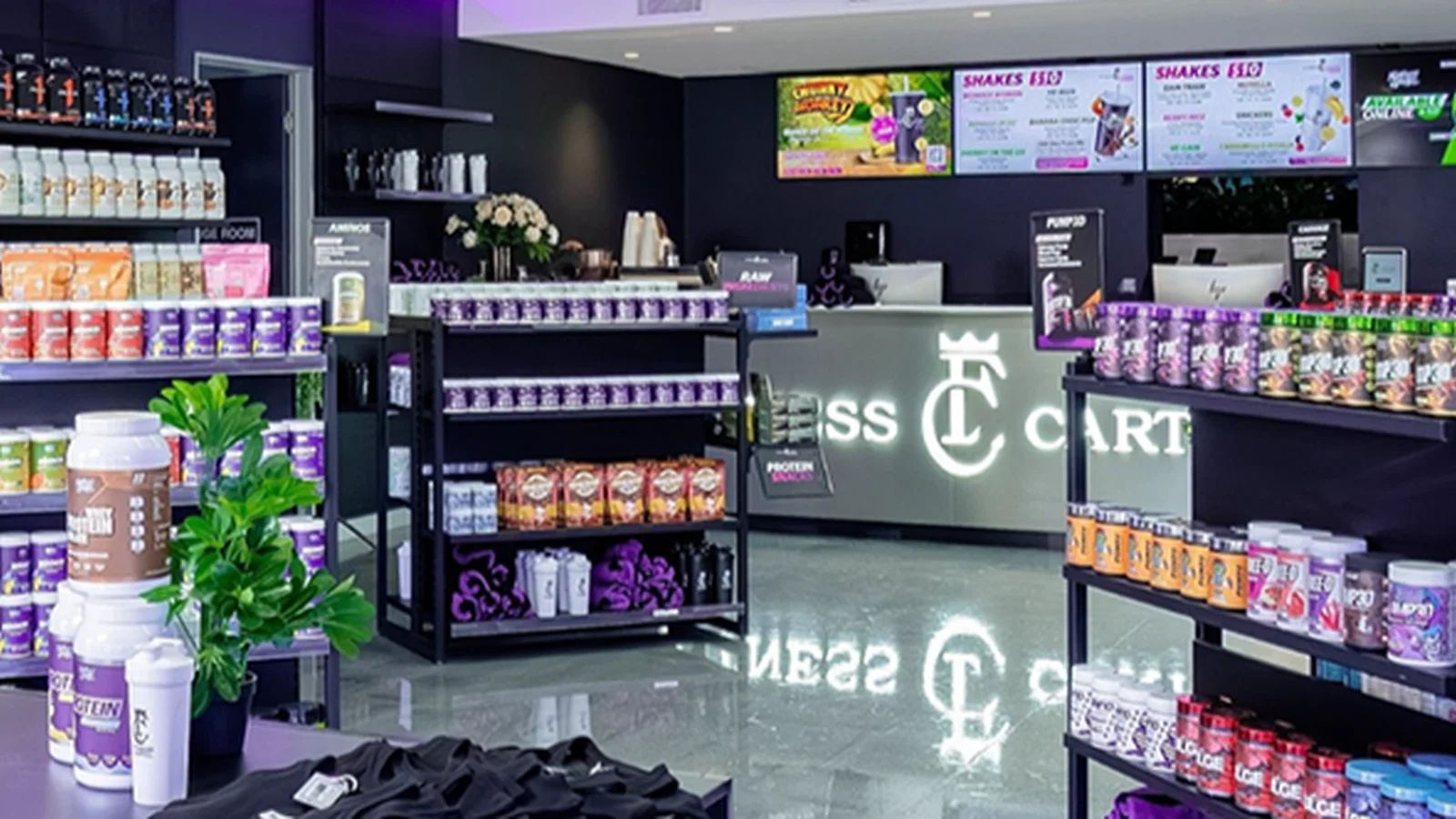
Content is now managed centrally, so one playlist update flows to every club at once, and staff no longer logs into a separate accounts for each site. Offline screens are visible at a glance, so the team can fix issues quickly. Fitness Cartel uses Fusion Signage extensively for advertising and promotion, including campaigns for in-club events, apparel, supplements, member feedback, shake-of-the-month offer, cafe shake menus and special offers.
In the company's Merse Wellness Spa locations, the screens display services menus and promotions, and Fitness Cartel is exploring potential advertising opportunities with external partners which could present another revenue channel.
Most Fitness Cartel clubs operate with up to three playlists — landscape, portrait and group fitness timetable — with main playlists feeding content into each one. That means the team can update a single playlist and have the changes flow through to every location at once, dramatically simplifying campaign execution. Countdown timers for new club launches and major refurbishments help build anticipation among prospective and existing members.
Fitness Cartel uses synchronization to ensure multiple screens around their gym are all playing the same content at exactly the same time, creating a more immersive in-club visual experience. The brand can now create a sync group, add multiple screens to this group and hit publish. If internet connectivity is an issue, there is a local sync server option for most devices. This is ideal for menu boards with content flowing from one screen to the next, or multi-screen displays to play in unison.
Challenges in the gym environment
When it comes to deploying digital signage there are always inherent challenges. The common ones are bandwidth, location-based issues and determining proper management processes.
In the fitness and gym realm there are specific challenges, according to Ampd Electronics Director Jason Lea.
"Gyms are busy, high-traffic spaces with long opening hours and even 24/7, so screens need to be reliable and easy to update," Lea said in an email interview. "Ampd handles the physical side (commercial-grade panels with warranty, players where needed, and the network backbone), while Fusion Signage ensures managing the content sent to the digital signage network is super easy for the Fitness Cartel marketing team."
A key to success, according to Perryman, is choosing a digital signage management solution that offers efficiency as well as potential for growth.
"Plan for scale from day one, choose a platform that isn't tied to one display brand, and bring in one integrator to handle design, supply, install and network so you have a single point of contact," she said in an email interview. "Hardware-wise the signage platforms 'on-chip' has set the pathway for this scalability. Software-wise the flexibility of Fusion Signage has meant one platform can grow with us."
About Judy Mottl

Judy Mottl is the editor of RetailCustomerExperience.com and DigitalSignageToday.com at Connect Media. She is an award-winning editor, reporter and blogger who has worked for top media for nearly four decades, including AOL, InformationWeek and Internet News, as well as for leading technology providers including HP. She’s written everything from breaking news to in-depth industry trends and reported on technology long before the internet arrived, including the debut of the first smartphone. When she's not sharing insights on digital signage deployments and trends in retail customer experience she's on the beach or watching the latest live murder trial.
Included In This Story

Fusion Signage
Australia’s friendliest digital signage software
Meet Fusion Signage. Australia’s friendliest digital signage software. Simple to learn, quick to deploy, powerful where it counts. World-class security, <3 minute response time, all-Aussie support and 99.9% uptime. Design, manage and deploy digital signage in minutes, from one neat place.
Related Media
Subscribe
Get the latest news and resources from Digital Signage Today.
Recent Posts