Hardware
Buying an Overhead 360 Photo Booth Starts With the Event Floor
Before buying an overhead 360 photo booth, evaluate the venue footprint, transport and assembly, actual camera framing, lighting and the complete guest session. MWE offers a practical approach to testing the hardware as an event station.
October 7, 2026
 ChatGPT
 Grok
Grok Perplexity
 Claude
Disclosure: This article is part of MWE's brand communications.
An overhead 360 photo booth is easy to judge from a finished clip. The camera moves, a group poses, and the result makes an event look lively. Buying the hardware requires a wider view: how the equipment gets into the venue, how people enter the capture area, and how the operator prepares for the next group.
My view is that an overhead booth should be evaluated as a complete event station. A compelling sample establishes the creative possibility. A rehearsal establishes whether the buyer's team can reproduce it with the camera, space and staffing they actually intend to use.
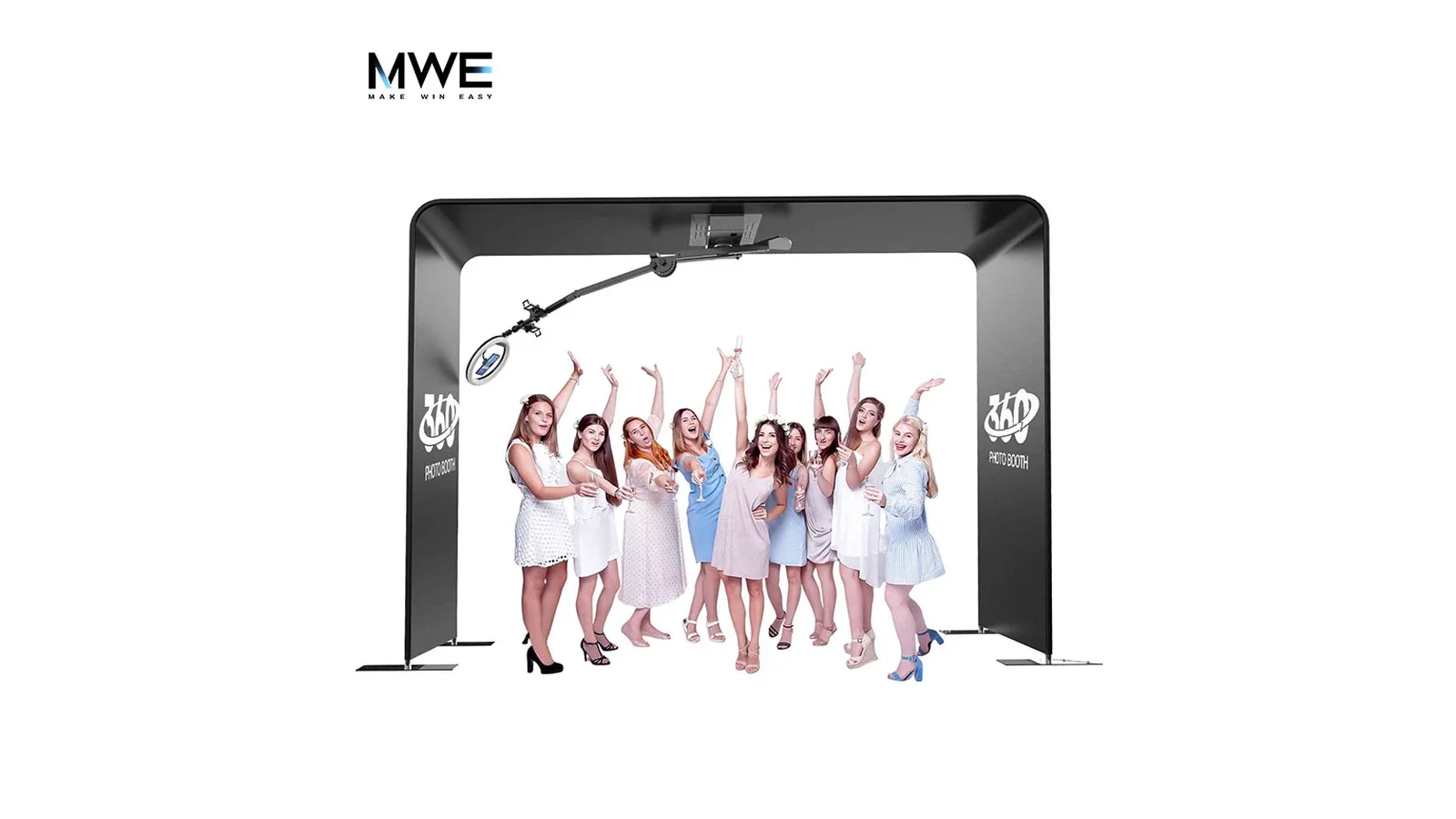
The Sky overhead 360 photo booth is an MWE example of this hardware category. Its product information describes overhead capture, adjustable lighting and flight-case packaging. Those features are useful starting points for questions about deployment. The final purchasing decision still needs a demonstration of the intended setup and written confirmation of its requirements.
Draw the working area before selecting the booth
The physical outline of a machine is only one part of the space it needs. A workable event plan also includes the capture area, the operator's position, the queue, the entrance and the exit. Guests waiting for a turn should not have to cross the route used by the group leaving.
Start with the venue plan and mark those activities separately. Identify nearby furniture, doors and other event stations. Ask the supplier to confirm the model's installation conditions, operating clearances and procedures from the applicable instructions. A promotional photograph cannot establish those requirements for a different room.
This exercise also exposes a commercial question: what experience is the buyer promising? A couple recording a short clip and a larger group coordinating a pose create different framing and coaching needs. Avoid making a capacity commitment from a brochure alone. Demonstrate the intended group arrangement with the actual capture device before accepting bookings around it.
Treat transport and assembly as part of the purchase
A flight case protects equipment in transit, but it does not tell the buyer how the entire trip will work. Consider the packed components, vehicle space, unloading arrangements and route from the loading area to the event floor. A convenient demonstration room may conceal a venue's stairs, narrow doorways or distant parking.
Ask for a complete unpacking and assembly demonstration. Note which tasks need tools, which parts require careful handling and what the supplier specifies about staffing. Time the process with the team that will operate the booth. The practical question is whether that team can assemble, inspect and test the equipment within the venue's permitted setup window.
Pack it down as well. A buyer should see where the holders, cables, lighting components and small fittings belong after an event. An inventory checklist and a consistent packing order make missing items easier to notice before the vehicle leaves. Confirm replacement-part availability and the support route in writing rather than assuming either from the main product description.
Test framing with the intended camera and guests
Capture quality is a property of the complete setup. Camera position, lens choice, exposure and the arrangement of guests all matter. A supplier's attractive sample may use a different device, background or lighting arrangement from the buyer's planned service.
Use the proposed camera or phone during acceptance testing. Ask the supplier to confirm the holder, mounting requirements and compatibility of that specific configuration. Record the intended group arrangement, then inspect the whole clip for framing and consistency. Check people at the edges as carefully as the person in the center.
Repeat the exercise with a different group arrangement. This is a useful way to identify where an operator needs to give a simple positioning cue or make an adjustment. Keep sample files from the agreed setup as a reference for future rehearsals. One polished clip should not become the entire acceptance record.
Rehearse under the venue's lighting conditions
Adjustable booth lighting provides options; the operator still has to choose settings that suit the room. Test faces, clothing and the background together. Try a bright room and a darker event setting if both are part of the planned business. Review exposure, color and visible reflections in the recorded result.
Write down the working arrangement once it is satisfactory. Include the position of lights, the chosen capture settings and any limitations identified during the demonstration. Future staff should be able to recreate an approved starting point without guessing which adjustments produced the sample.
Measure a complete guest session
The length of a recorded clip does not describe the length of a guest session. Count the welcome, positioning, explanation, capture, review and preparation for the next group. Run several sessions in sequence and observe where staff spend their time.
Include an interrupted session in the rehearsal, following the supplier's operating instructions. Establish who can authorize a restart and how staff explain a retake. Keep the operator's responsibilities clear, particularly when an event host is also encouraging guests to participate.
The strongest buying demonstration ends with ordinary repetition: another group enters, receives clear guidance, records an acceptable result and leaves while the operator prepares the booth again. An overhead capture system earns its place in an event business when the team can deliver that experience consistently. Evaluate the equipment on that full cycle, then match bookings to the setup that was actually demonstrated.
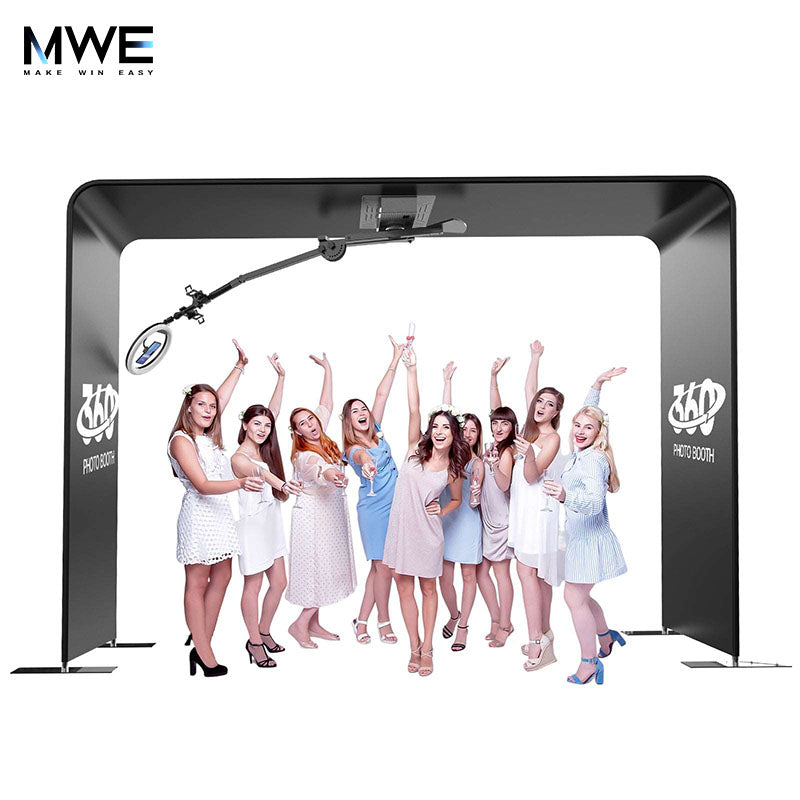
Image: MWE Sky overhead 360 photo booth. Courtesy of MWE.
Included In This Story

MARVEL TECH GROUP CO., LTD.
Make Win Easy
MWE manufactures commercial-grade LCD/LED digital signage for retail, QSR, and DOOH applications. Specializing in IP65-rated outdoor displays (2500-5000 nits), indoor video walls, LED poster displays, and Android-based solutions. Regional stock in USA/Germany. Tier-1 components (Samsung, LG, BOE). Built for reliability.
Related Media
Subscribe
Get the latest news and resources from Digital Signage Today.