Display Technology
A Commercial Display Becomes Furniture the Moment It Enters the Room
A commercial display occupies space, shapes circulation and needs service access. MWE explains why the intended user action and the floor plan should guide the choice between floor-standing, tabletop, mobile and wall-mounted displays.
October 7, 2026
 ChatGPT
 Grok
Grok Perplexity
 Claude
Disclosure: This article is part of MWE's brand communications.
A screen may begin as a rectangle in a product comparison. The moment it enters a store, lobby, venue, or meeting area, it becomes part of the room.
It occupies space. It changes a sight line. People walk toward it, around it, or past it. Someone needs access to power, content, controls, and eventually maintenance. If it has touch, a visitor needs a comfortable place to stand and reach. If it moves, it needs a route and a place to wait when it is not in use.
That makes display form factor more than a visual preference. It is an operational choice about how technology and people will share the same space.
MWE's commercial-display categories include floor-standing displays, tabletop screens, mobile units, and wall-mounted touchscreens. These are not four versions of the same room decision. Each one creates a different relationship with the surrounding space.
The same content behaves differently in a different form
Imagine a simple welcome message.
On a wall-mounted screen, it can sit within an existing path and be visible without creating a new object on the floor. On a floor-standing display, the message can move closer to the audience, but the unit now has a footprint and becomes part of circulation. On a tabletop screen, the experience becomes more personal and reachable, while counter depth and viewing distance matter. On a mobile display, flexibility increases, but every move introduces a question about power, stability, storage, and the next setup.
The pixels may carry the same file. The physical experience is not the same.
This is why a request such as “We need a screen for the lobby” is not yet a useful brief. A lobby screen that helps visitors find a destination has a different job from one that plays brand films above the reception desk. A retail display intended for close interaction has a different spatial requirement from one designed to be noticed across the store.
The task should guide the form, not the other way around.
Circulation is part of the specification
Facilities and experience teams already think about how people move through a room. Display planning belongs in that conversation.
A floor-standing unit can become a natural stopping point—or an obstacle—depending on its location. A touchscreen placed where one user blocks an entrance can create friction even when the interface works perfectly. A wall-mounted screen installed too high may be visible as signage but uncomfortable for interaction. A tabletop display can invite a closer look, yet disappear behind merchandise or equipment if the counter plan changes.
These are not abstract design concerns. They affect whether the display is noticed, used, avoided, or damaged.
The useful planning questions are physical: Where will a person first see the screen? Where will they stand? What path remains open behind them? Can a staff member reach the unit without moving other fixtures? Does the mounting position support the intended orientation and viewing distance?
A floor-standing display product page can define available sizes and configurations. The room decides whether those options make sense.
Service access deserves a place in the floor plan
A clean installation often hides cables and controls, which is good until someone needs to reach them. The most attractive position on a rendering may be the least practical position for updating content, inspecting a connection, cleaning the screen, or moving the unit out of service.
That tension is easier to solve during planning than after installation.
For fixed screens, the team can identify a safe route to power and network connections and leave appropriate access for the approved mounting system. For a movable unit, the plan can include the path between operating and storage locations. For an interactive display, the room can provide enough clearance for a visitor and for the staff member who may need to assist them.
None of this requires turning a display project into an architecture exercise. It requires recognizing that the screen will live somewhere after the product comparison is over.
Choose the place and the task together
The strongest display brief combines two sentences: what the screen needs to help people do, and where that action will happen.
“Show daily promotions to people entering from the east door” is more useful than “install a floor-standing screen.” “Let a visitor browse three service options at the reception counter” is more useful than “buy a small touchscreen.” “Move campaign content between the lobby and two event rooms” is more useful than “find a display on wheels.”
Those descriptions let a supplier discuss form factor without guessing at the operating context. They also give internal teams a common way to evaluate whether the screen fits the room before debating secondary features.
MWE is a Marvel Tech Group hardware brand whose categories include commercial displays. That role begins with the physical reality of the installation: a display has to work as technology and coexist as an object in the space.
Bring the floor plan, the primary traffic path, and the expected user action into the next display conversation. Once the room is visible, the right form becomes easier to recognize.
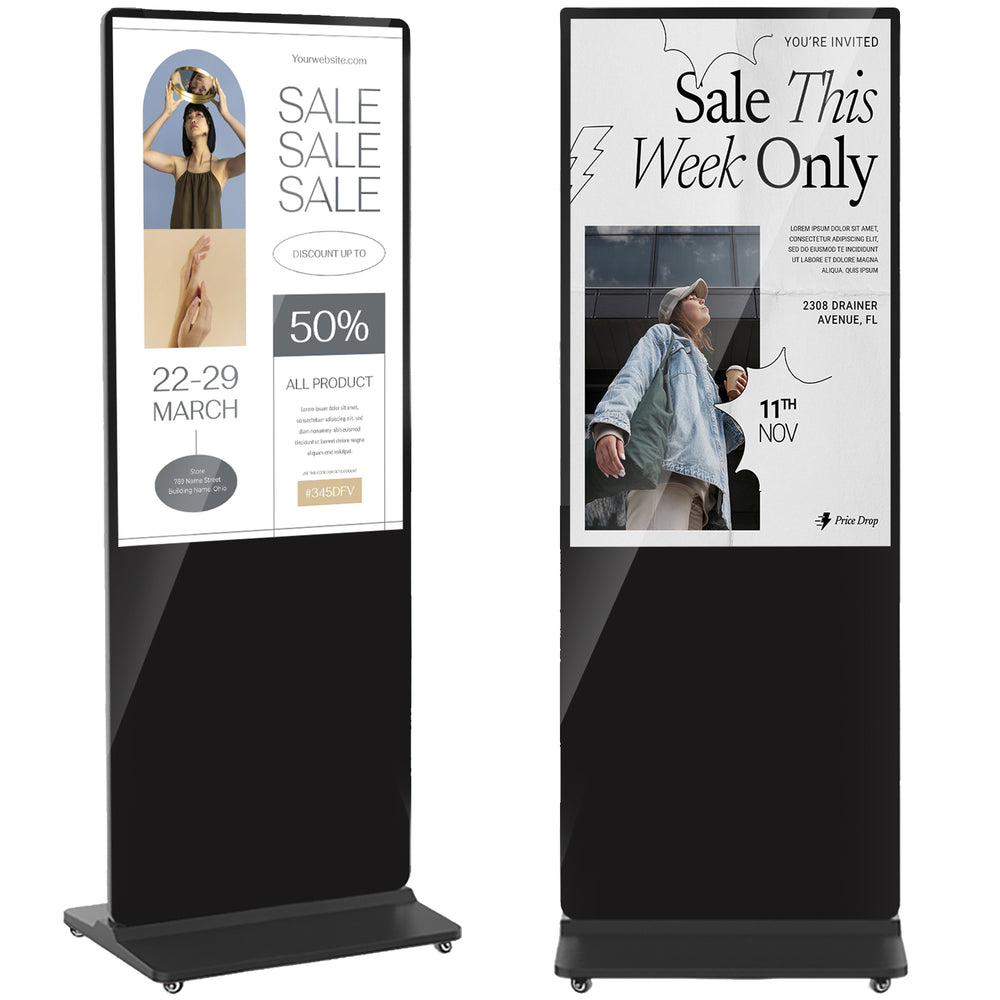
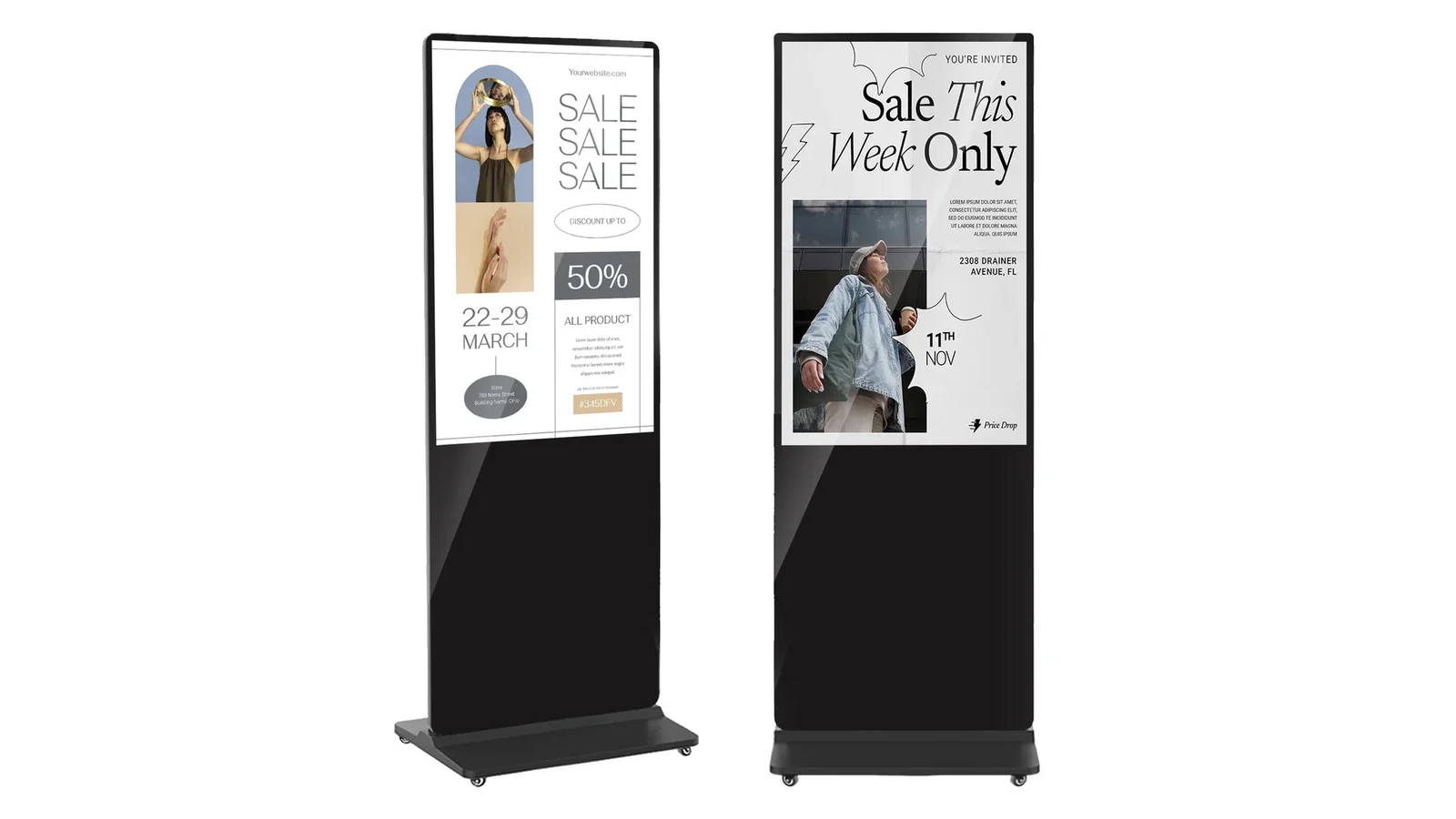
Image: MWE floor-standing commercial displays, shown as a product illustration. Courtesy of MWE.
Included In This Story

MARVEL TECH GROUP CO., LTD.
Make Win Easy
MWE manufactures commercial-grade LCD/LED digital signage for retail, QSR, and DOOH applications. Specializing in IP65-rated outdoor displays (2500-5000 nits), indoor video walls, LED poster displays, and Android-based solutions. Regional stock in USA/Germany. Tier-1 components (Samsung, LG, BOE). Built for reliability.
Related Media
Subscribe
Get the latest news and resources from Digital Signage Today.