Software
Digital signage has never been more capable or more simple
I've been working in digital signage for over 12 years now, and while a lot has progressed, the fundamentals haven't changed.
September 29, 2026
 ChatGPT
 Grok
Grok Perplexity
 Claude
Back then, we were digital signage integrators, and a big part of that was educating Australian businesses on what digital signage even was. (These days people know what it is, the conversation is more about what you can do with it.)
We built touchscreen applications, created custom content, installed screens and worked on one-to-one solutions. Over time, our focus shifted from building those individual solutions to the software behind digital signage. Our years working directly with businesses in this space meant we could shape our software around what they actually needed.
Today, digital signage can do far more than it could then. But in the same breath, it's also become much simpler.
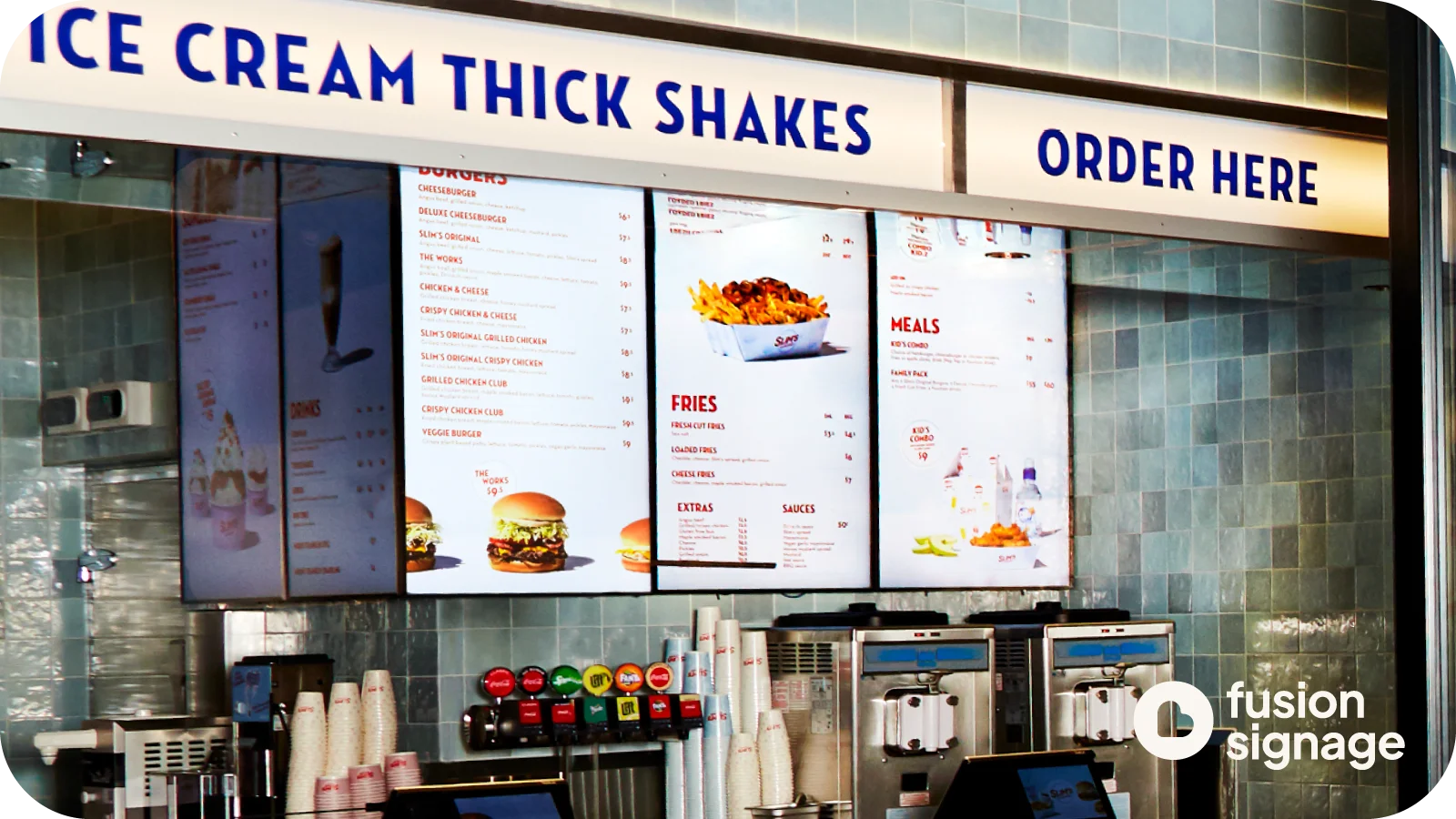
Screens are better. They're thinner and better built for commercial environments. System-on-chip means you often don't need an external media player. Software is easier to install and use. Content that once required a designer can now be created in Canva in minutes.
A diminishing attention span
At the same time, getting someone's attention has become harder.
Researcher Gloria Mark has been measuring how long people spend on a screen before switching their attention elsewhere for around two decades. In 2004, the average was around two and a half minutes. By 2012, it was 75 seconds. More recently, 47 seconds.
For digital signage specifically, we're talking seconds. Audience measurement company Quividi found an average attention time of 4.6 seconds in a global benchmark drawing on data from more than 30 million people. Later data from Quividi showed attention times trending even lower.
There's a lot of noise competing for our attention these days, and we've become pretty good at tuning a lot of it out.
Meanwhile, the technology available to us keeps growing. Integrations, custom apps and APIs, synchronisation, live data and now the likes of AI. The list of what you could do with a screen is getting pretty long.
The temptation is to think that means we should be doing more with it.
In our experience, less is more.
Making signage make sense
We've seen businesses over complicate their digital signage, particularly at launch, only for it to fall away over time because it's too hard to keep up. The person driving it leaves or they simply realise they don't actually need everything they originally set out to achieve.
Most businesses just want to put images and videos on their screens. They want to update them quickly and easily. They need affordability. And increasingly, they need it to be secure. It's really not rocket science and it doesn't have to be.
When you only have a few seconds of someone's attention, what you put on the screen still matters.
A screen at the POS counter has a different job to a screen in the window. The person looking at it is in a different moment, with a different amount of time and probably a different reason for being there.
It comes back to where the screen is, who's looking at it and what it needs to do.
Location → audience → purpose → relevance
Maybe the screen needs to give people useful information. Maybe it's there to reduce perceived wait times. Maybe you want to set a mood or add ambience. It could welcome someone, capture their attention in the five seconds they're walking by or, yes, sell them something.
What matters is whether what's on the screen makes sense for the person standing in front of it.
Sometimes less is enough. Sometimes different is better.
Keeping it simple
And none of this thinking is particularly new. Plenty of great digital signage integrators have built their businesses around the principles of content being king and strategic placement.
What's changed is how much more we have at our disposal.
Content is still king. It's more about how you use it and with what other tools.
Live data can flow straight onto a screen without someone manually updating it. Content can respond to the weather, time of day or what's happening elsewhere in the business. Integrations can remove manual work. Synchronisation can turn multiple screens into one connected experience.
But for me, the real progress is that these capabilities don't have to make digital signage more complicated. Often, they can make it simpler.
That's something we've seen again and again over the years. Businesses don't need more things to manage. They need fewer steps. They need to be able to update their screens quickly with the comfort of knowing the right content is going to the right place.
Sometimes an integration is what makes that simpler. Sometimes it's scheduling or tagging content so nobody has to manage every screen individually. And sometimes all that's needed is a playlist of images or videos on a screen.
Keep digital signage as simple as it needs to be. The opportunity to do more is there when there's reason for it.
Digital signage can be incredibly simple while the industry behind it has become incredibly capable. After more than 12 years in this space, I think that's where we've made the most progress.
Included In This Story

Fusion Signage
Australia’s friendliest digital signage software
Meet Fusion Signage. Australia’s friendliest digital signage software. Simple to learn, quick to deploy, powerful where it counts. World-class security, <3 minute response time, all-Aussie support and 99.9% uptime. Design, manage and deploy digital signage in minutes, from one neat place.
Related Media
Subscribe
Get the latest news and resources from Digital Signage Today.