Display Technology
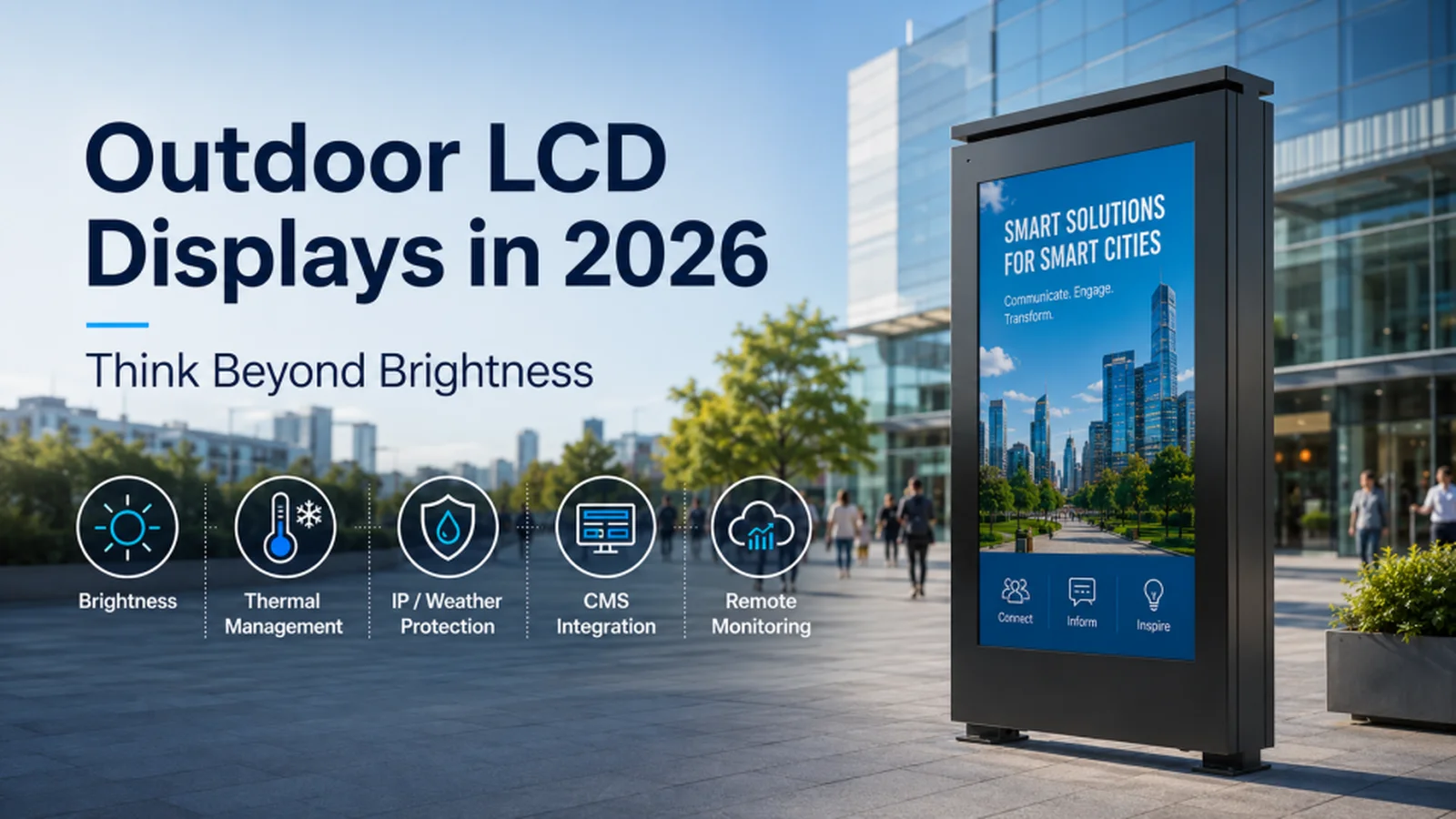
Outdoor LCD Displays in 2026: Why Buyers Need to Think Beyond Brightness
As outdoor LCD displays become essential for retail, transportation, QSR, EV charging and DOOH networks, buyers need to evaluate more than brightness and price. This article explains why environment, thermal design, IP protection, CMS planning and remote monitoring matter for reliable outdoor signage projects in 2026.
July 9, 2026
 ChatGPT
 Grok
Grok Perplexity
 Claude
Outdoor digital signage has moved well beyond the role of a simple advertising screen.
For retailers, transportation operators, smart city planners, quick-service restaurants, EV charging networks and digital out-of-home media owners, the outdoor display is now part of the customer experience. It guides people, delivers real-time information, supports promotions, improves service efficiency and, in many cases, becomes a revenue-generating media asset.
That shift has changed the way buyers should evaluate outdoor LCD displays.
In the past, many purchasing conversations started with two questions: What size is the screen, and how much does it cost? In 2026, that approach is no longer enough. Outdoor signage projects are exposed to sunlight, rain, dust, temperature changes, network instability and continuous operating demands. A screen that looks good in a showroom may not survive a full summer on a street corner, a bus stop or a drive-thru lane.
The smarter question is not simply, “How bright is the display?” It is, “Can this display operate reliably in the real environment where it will be installed?”
The environment should lead the hardware decision
One of the most common mistakes in outdoor signage procurement is choosing the display before fully understanding the environment.
A screen installed in a shaded retail entrance has very different requirements from one facing direct afternoon sunlight. A wall-mounted unit on a commercial building needs a different service strategy from a freestanding outdoor kiosk in a public square. A display used in a coastal city must be prepared for humidity and corrosion. A screen in a hot inland market needs serious thermal planning.
Before discussing model numbers, buyers should define several basic conditions:
- Is the display fully outdoor, semi-outdoor or window-facing?
- Will it face direct sunlight?
- What is the typical viewing distance?
- Will the screen operate 24/7?
- Is the installation supervised or unattended?
- How will content be updated?
- Who will maintain the display after installation?
- Is remote monitoring required?
These questions may sound simple, but they determine almost every major hardware choice: brightness, IP rating, cooling structure, glass treatment, operating system, CMS workflow and maintenance access.
Brightness still matters — but it is not the whole story
Brightness is often the first specification buyers look at, and for good reason. Outdoor content must remain readable in strong ambient light.
For many outdoor LCD applications, 2,500 to 5,000 nits is a common range, depending on sunlight exposure, viewing angle and content type. A display used under partial sunlight may not need the same brightness as a roadside DOOH screen or an EV charging station display exposed to direct sun.
But higher brightness alone does not guarantee better performance.
High brightness outdoor lcd display also creates more heat. If the enclosure design, airflow, backlight system and temperature control are not engineered properly, the screen can suffer from black spots, color shift, shortened backlight life or repeated shutdowns. In other words, brightness should be evaluated together with thermal management.
A well-designed outdoor LCD display balances brightness, power consumption, optical performance and cooling. Buyers should ask not only about the nit rating, but also about how the system manages heat under real outdoor conditions.
Weatherproofing is more than an IP number
IP ratings are important, but they should not be treated as the only proof of outdoor readiness.
For outdoor digital signage, IP65 and IP66 are common protection levels. These ratings indicate resistance to dust and water, but the actual reliability of the product also depends on cabinet design, sealing quality, cable entry protection, glass structure, ventilation strategy and long-term material durability.
A poorly designed cabinet with a printed IP rating may still fail if water enters through cable ports, condensation builds inside the enclosure or dust blocks the cooling system.
Buyers should look closely at:
- Cabinet sealing design
- Door locks and service access
- Cable entry protection
- Glass and gasket structure
- Internal airflow path
- Dust and humidity protection
- Corrosion resistance
- Maintenance procedures after installation
Outdoor signage is a long-term infrastructure investment. Protection must be designed into the whole product, not added as a marketing label.
Thermal management is becoming a buying priority
As outdoor LCD displays become brighter and more widely deployed, heat dissipation has become one of the most important factors in long-term performance.
Outdoor screens face heat from several sources at the same time: sunlight on the glass, high ambient temperature, internal backlight heat, media player heat and power supply heat. In direct sunlight, these factors can combine quickly.
A professional outdoor display should have a clear thermal design strategy. Depending on the project, this may include fan cooling, heat exchangers, air conditioning systems, separated internal compartments, temperature sensors or remote alarms.
For a single storefront display, thermal failure is inconvenient. For a network of hundreds of outdoor screens, it becomes a serious operating cost. Downtime can affect advertising revenue, customer communication, public information delivery and brand trust.
This is why buyers should treat thermal management as a core specification, not a technical detail.
Remote monitoring changes the economics of outdoor networks
The larger the signage network becomes, the more important remote monitoring becomes.
A single outdoor display can be checked manually. A network of 50, 200 or 1,000 screens cannot be managed efficiently with site visits alone. Operators need to know which screen is online, which one is overheating, which door has been opened, which unit has lost power and which location needs service.
Remote monitoring can help reduce maintenance cost and improve uptime by identifying problems before customers or advertisers report them.
For outdoor digital signage networks, useful monitoring functions may include:
- Temperature status
- Humidity status
- Screen brightness
- Power status
- Door open alerts
- Network connection
- Fan or cooling system status
- Vibration or tilt alerts
- Water or smoke alerts
- Online/offline device status
This is especially valuable for DOOH media operators, transportation networks, smart city projects and multi-location retail chains. In these environments, the display is not just a piece of hardware. It is an endpoint in a larger operating system.
CMS planning should happen before installation
Content management is another area where many projects run into problems.
Outdoor displays are often purchased as hardware first, while the CMS workflow is discussed later. That can create unnecessary limitations. The display may not support the customer’s preferred software, the media player may lack enough performance, or the network setup may not match the content update plan.
Before purchasing outdoor LCD displays, buyers should define the content workflow:
- Will content be updated locally or through a cloud CMS?
- Will different screens show different playlists?
- Does the project require scheduling by location, time or campaign?
- Is emergency messaging needed?
- Does the system need to support video, images, scrolling text or split-screen layouts?
- Is third-party CMS integration required?
- What happens if the network connection is unstable?
- Who has permission to update content?
For advertising networks, CMS flexibility affects campaign delivery and revenue. For QSR drive-thru lanes, it affects menu updates and promotion speed. For transportation and smart city projects, it affects public communication. For retail, it affects how quickly stores can respond to seasonal campaigns, inventory changes and local events.
The hardware and CMS should be planned as one system.
Outdoor signage buyers are becoming more operational
A broader change is happening in the market. Outdoor display buyers are no longer only evaluating hardware specifications. They are evaluating operational risk.
That means the conversation is expanding from “screen size and brightness” to questions such as:
- How easy is the unit to install?
- Can the cabinet be serviced from the front?
- Are spare parts available?
- Can the supplier provide drawings and technical support?
- Can the system integrate with an existing CMS?
- Is OEM or ODM customization available?
- Can the product support local certification requirements?
- What is the long-term cost of maintenance?
This shift is healthy for the industry. It encourages suppliers to design products for real deployment conditions rather than showroom demonstrations.
Where outdoor LCD displays fit best
Outdoor LCD displays remain one of the most practical solutions for many close-to-mid-range viewing applications. Compared with large-format LED walls, LCD displays can offer strong image detail, familiar content formats and cost-effective deployment for many commercial use cases.
Common applications include:
- Outdoor retail advertising
- Shopping mall entrances
- Wall-mounted commercial building displays
- Freestanding outdoor totems
- Smart city information kiosks
- EV charging station screens
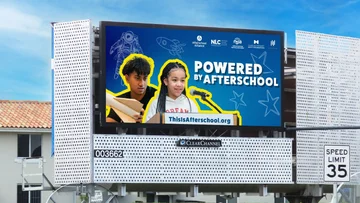
- Bus stop and transit displays
- QSR drive-thru menu boards
- Tourism and public wayfinding
- Campus and hospital outdoor communication
The best format depends on viewing distance, installation environment, available space and content purpose. A 55-inch wall-mounted outdoor screen may be enough for a retail entrance. A double-sided freestanding kiosk may be better for a pedestrian area. A multi-screen menu board may be more effective for drive-thru service.
The right answer starts with the use case.
A practical framework for buyers
For organizations planning an outdoor LCD display project in 2026, a simple decision framework can help reduce risk.
Start with the environment. Define sunlight exposure, temperature range, rain, dust, wind, humidity and installation position.
Match the brightness to the real viewing condition. Do not overpay for brightness that is not needed, but do not under-spec a screen that will face direct sunlight.
Evaluate the enclosure carefully. IP rating matters, but cabinet design, sealing, glass, cable protection and service access matter just as much.
Ask about thermal design. Heat is one of the most common causes of outdoor display failure.
Plan the CMS before installation. Content workflow should be part of the hardware decision.
Consider remote monitoring for multi-screen deployments. It can reduce maintenance cost and improve uptime.
Compare total cost, not only unit price. A cheaper screen can become expensive if it fails often, consumes too much power or requires frequent service visits.
The bottom line
Outdoor LCD displays are becoming more important across retail, transportation, smart city, QSR, EV charging and DOOH environments. But as the applications become more mission-critical, the buying process also needs to become more disciplined.
Brightness, screen size and price still matter. They just do not tell the full story.
The more important question is whether the display is designed for the environment, the content workflow and the long-term operation model of the project.
For buyers, distributors and system integrators, the best outdoor display is not always the one with the most impressive specification sheet. It is the one that keeps working, remains readable, is easy to manage and supports the business goal behind the screen.
MWE (Marvel Technology) provides high-brightness outdoor LCD display solutions for wall-mounted, freestanding, double-sided, drive-thru, smart city and customized outdoor digital signage projects. With project-based configuration, CMS support, remote monitoring options and OEM/ODM customization, MWE Display helps partners build outdoor signage networks designed for real operating conditions.
Included In This Story

MARVEL TECH GROUP CO., LTD.
Make Win Easy
MWE manufactures commercial-grade LCD/LED digital signage for retail, QSR, and DOOH applications. Specializing in IP65-rated outdoor displays (2500-5000 nits), indoor video walls, LED poster displays, and Android-based solutions. Regional stock in USA/Germany. Tier-1 components (Samsung, LG, BOE). Built for reliability.
Related Media
Subscribe
Get the latest news and resources from Digital Signage Today.
Recent Posts