DOOH Advertising
Consumer behavior spurring moving and dynamic OOH media growth
Moving and dynamic OOH is entering its next chapter, according to OAAA Chief Operating Officer Patrick Dolan. The technology will continue to evolve, but the core opportunity will remain: helping brands connect with people in the real world at moments that matter.
July 7, 2026 by Judy Mottl — Editor: RetailCustomerExperience.com & DigitalSignageToday.com, Connect Media
 ChatGPT
 Grok
Grok Perplexity
 Claude
The Out of Home Advertising Association of America has issued a guide, "Strategic Guide to Moving & Dynamic OOH Media," all about moving and dynamic OOH media -- one of the fastest-growing segments in the OOH industry.
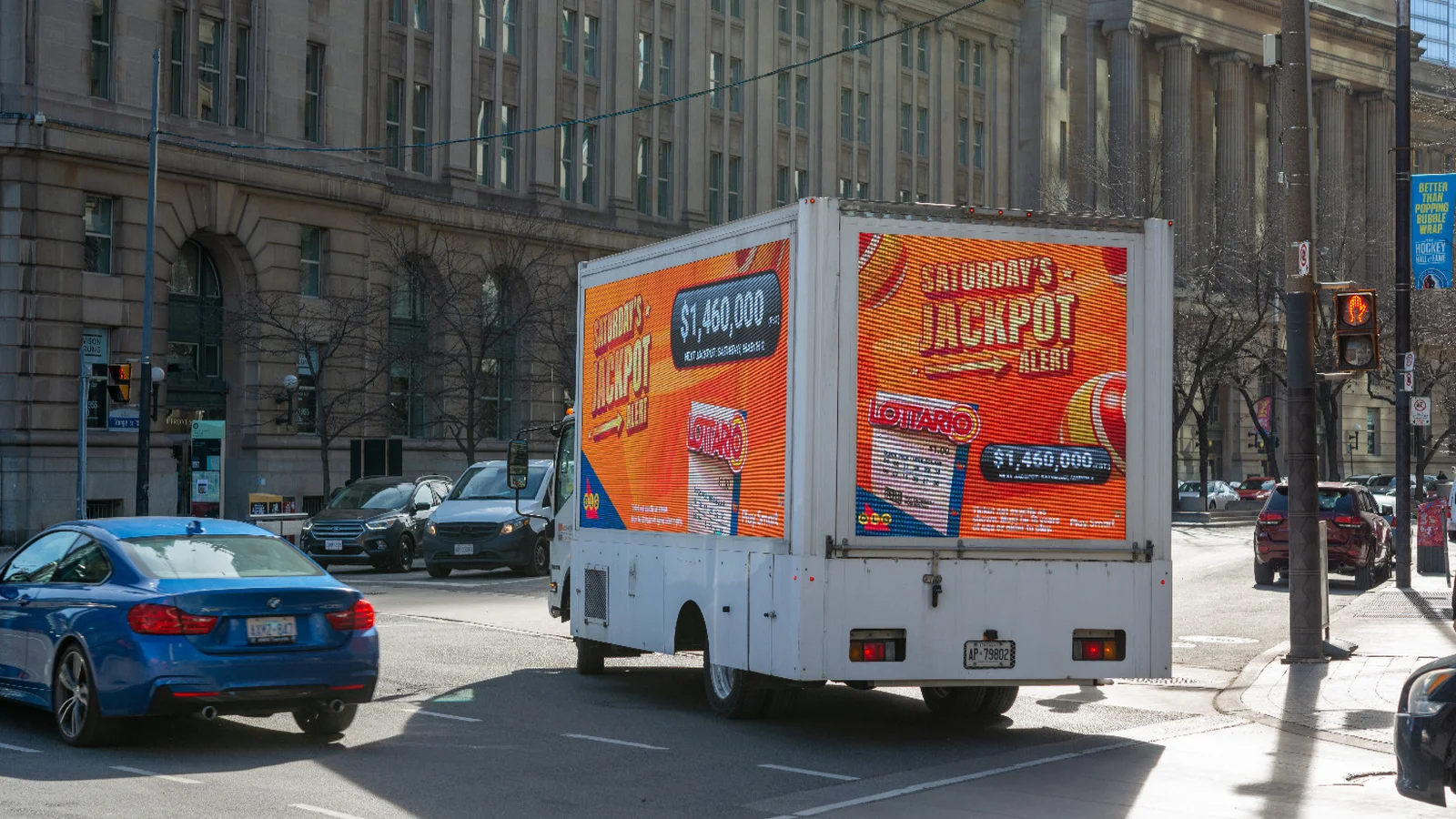
The guide offers a deep dive on why brands are increasingly investing in transit advertising, mobile billboard, rideshare media, vehicle wraps, waterway advertising and experiential activations.
The big reason for the increased investing? Consumers are spending more time on the move and OOH advertising is all about being where the consumer is.
Out of home advertising is no longer confined to fixed locations and static impressions, states the guide, which also offers up creative best practices and real-world campaign examples
To gain insight into the moving and dynamic OOH media trend, as well as the guide's origin, Digital Signage Today reached out to Patrick Dolan, OAAA's chief operating officer, in an email interview.
The guide's origin
Q. What prompted the OAAA to do the guide?
Dolan: The "Strategic Guide to Moving & Dynamic OOH Media" was developed because the marketplace is changing. Consumers are more mobile than ever, technology is advancing rapidly, and marketers are looking for new ways to connect with people in authentic, real-world environments. At the same time, automation, robotics, AI, and other emerging technologies are transforming how brands operate and how media is bought, planned, and optimized. Moving and dynamic OOH sits at the intersection of these trends.
We're also seeing consumers place an even greater value on authentic, real-world experiences in an increasingly digital world. As more of our lives are spent on screens, brands are looking for meaningful ways to connect with people in physical environments that feel contextual, tangible, and memorable. Moving and dynamic OOH delivers on that opportunity by reaching audiences as they move through their daily lives in ways that are both relevant and difficult to ignore.
The guide was created to give marketers a practical resource that brings together everything they need to understand the category, from the different formats and planning considerations to measurement capabilities, creative best practices, and real-world applications. Our goal is to demystify the space and give brands and agencies the confidence to make moving and dynamic OOH a more strategic part of their omnichannel media plans.
While OAAA has previously published research related to this space, including its 2022 Digital Moving Out-of-Home Measurement Methodology, this is our first comprehensive strategic guide dedicated to the broader Moving & Dynamic OOH category.
Rather than focusing primarily on measurement, this report takes a holistic view of the marketplace, exploring the formats, planning strategies, creative opportunities, technological innovation, and the evolving role that moving and dynamic OOH plays in today's media ecosystem.
What's spurring moving and dynamic OOH
Q: What is the biggest 'surprise' finding, and is moving and dynamic OOH media being spurred forward because consumers are spending more time on the move or because they're spending more attention to OOH media in general?
Dolan: The biggest takeaway isn't a single surprising finding, it's how much the category has matured. Moving and dynamic OOH has evolved from a specialized media tactic into a sophisticated, measurable, and increasingly strategic part of the omnichannel media mix.
One of the most significant developments has been the rapid advancement of measurement, automation, and data capabilities. Advertisers today have far greater visibility into campaign performance and audience movement, making it easier to plan, optimize, and demonstrate results. As automation continues to reshape the media industry, and as innovations such as robotics and autonomous vehicles begin to transform how people and goods move through our cities, moving and dynamic OOH is well-positioned to become an even more integrated part of how campaigns are planned, bought, and experienced.
At the same time, consumer behavior is reinforcing the opportunity. People continue to spend time commuting, traveling, shopping, dining, attending live events, and moving throughout their communities. As more of daily life is spent in digital environments, consumers continue to value authentic, in-real-life experiences, giving brands meaningful opportunities to connect with people in physical spaces that capture attention and create lasting impressions.
That value is reflected in the research: a 2024 OAAA/Harris Poll study found that 73% of consumers view digital out of home advertising favorably, more than television, social media, online, audio, or print advertising and 76% reported taking action after recently seeing a DOOH ad.
So it's not an either-or proposition. The category is being propelled by a convergence of forces: increased consumer mobility, growing demand for authentic, real-world brand experiences, and major advances in measurement and automation that give marketers the confidence to invest. Together, those trends are making moving and dynamic OOH one of the most exciting and fastest-evolving segments of the media landscape.
The future ahead
Q. In terms of advances in measurement, where does the technology ability stand today and where may it go in three to five years?
Dolan: I think the industry has made substantial progress over the last five years. Not that long ago, measurement for moving and dynamic OOH relied primarily on traffic counts, circulation estimates, and modeled impressions.
Those metrics provided a good indication of potential reach, but they offered limited visibility into who was actually exposed to a campaign or what happened afterward.
Today, the landscape looks very different. Advances in mobile location data, audience intelligence, AI, automation, attribution, and standardized measurement methodologies have fundamentally changed how advertisers evaluate moving and dynamic OOH. Marketers can now better understand not only reach and frequency, but also audience composition, visitation patterns, and, in many cases, the business outcomes associated with a campaign. As a result, moving and dynamic OOH has become a far more accountable, data-driven medium that can be planned, optimized, and measured alongside digital, television, audio, and other channels within an omnichannel strategy.
Just as important has been the industry's commitment to collaboration. Across the OOH ecosystem, companies have come together to develop common standards and improve interoperability, giving advertisers greater confidence that campaigns can be planned, measured, and compared using consistent methodologies. That collaboration has been instrumental in accelerating adoption and increasing marketer confidence.
Looking three to five years ahead, I think we're entering another phase of transformation. AI and automation will make campaign planning and optimization increasingly dynamic, while advances in robotics, autonomous vehicles, connected infrastructure, and smart cities will create new opportunities to deliver contextually relevant messaging as people and goods move through the physical world. Measurement will continue to evolve beyond reporting what happened to helping marketers predict performance and optimize campaigns in real time.
Ultimately, I think the future isn't just about more precise measurement, it's about making moving and dynamic OOH as intelligent, interoperable, and outcome-focused as every other major media channel. That's where the industry is headed, and it's one of the reasons I'm so optimistic about the future of this medium.
Q: Is moving and dynamic OOH media hitting its prime or will it be very different in a decade?
Dolan: I actually think we're at an inflection point, not the peak. The category has matured tremendously over the last several years, but in many ways we're just beginning to see what's possible.
Over the next decade, I think moving and dynamic OOH will become far more intelligent, connected, and responsive. Advances in AI, automation, robotics, autonomous vehicles, connected infrastructure, and smart city technologies will create entirely new opportunities for brands to engage audiences as they move through the physical world. Campaigns will become increasingly data-driven, contextually relevant, and optimized in near real time.
I also don't think marketers will view moving and dynamic OOH as a standalone channel. It will become an even more seamless part of an omnichannel strategy, working alongside digital, mobile, retail media, social, connected TV, and emerging platforms to create a unified consumer experience. As measurement and interoperability continue to improve, the distinctions between channels will matter less than the outcomes they deliver together.
Perhaps the biggest trend isn't technological at all. As our lives become increasingly digital, consumers continue to value real-world experiences, which creates a powerful opportunity for brands to connect with people where they're actively living, working, shopping, traveling, and experiencing the world. That's where moving and dynamic OOH has a unique advantage – it reaches people in meaningful physical moments that are both memorable and difficult to replicate through other media.
So, I don't think the category is hitting its prime. I think it's entering its next chapter. The technology will continue to evolve, but the core opportunity will remain the same: helping brands connect with people in the real world at moments that matter.
About Judy Mottl

Judy Mottl is the editor of RetailCustomerExperience.com and DigitalSignageToday.com at Connect Media. She is an award-winning editor, reporter and blogger who has worked for top media for nearly four decades, including AOL, InformationWeek and Internet News, as well as for leading technology providers including HP. She’s written everything from breaking news to in-depth industry trends and reported on technology long before the internet arrived, including the debut of the first smartphone. When she's not sharing insights on digital signage deployments and trends in retail customer experience she's on the beach or watching the latest live murder trial.
Related Media
Subscribe
Get the latest news and resources from Digital Signage Today.