DOOH Advertising
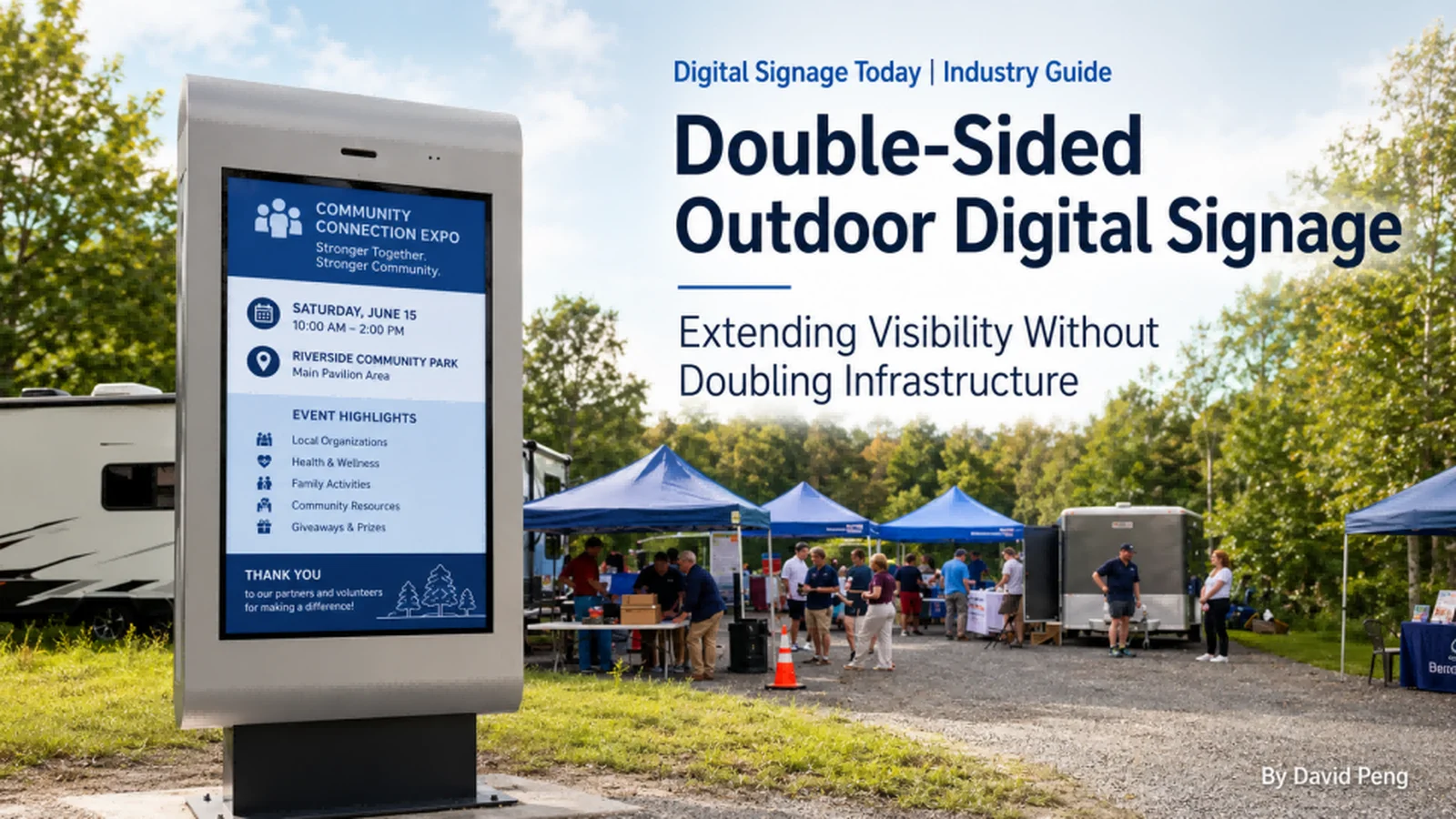
Double-Sided Outdoor Digital Signage: Extending Visibility Without Doubling Infrastructure
This article examines how double-sided outdoor digital signage can increase visibility in bidirectional traffic areas while reducing infrastructure duplication. It covers key applications, brightness control, thermal management, IP protection, CMS requirements, and supplier selection.
August 7, 2026
 ChatGPT
 Grok
Grok Perplexity
 Claude
Outdoor digital signage has traditionally been designed around a simple assumption: the audience approaches the screen from one primary direction.
In many real-world environments, however, pedestrian and vehicle traffic moves both ways.
Sidewalks, transit stops, retail entrances, parking facilities and transportation hubs are all examples where a single-facing display may communicate effectively with one audience while leaving another looking at the back of the enclosure.
This is where double-sided outdoor digital signage is becoming an increasingly practical option.
By integrating two displays into a single outdoor structure, operators can communicate with audiences approaching from opposite directions while sharing much of the same supporting infrastructure.
But deploying two screens in one enclosure is not simply a matter of adding another LCD panel. Brightness, heat management, environmental protection, structural design and content control all become more important.
Why Double-Sided Displays Make Sense
The most obvious advantage is visibility.
A conventional single-sided display primarily serves viewers approaching from one direction. A double-sided installation creates two communication surfaces facing opposite directions, making it particularly useful in locations where traffic naturally flows both ways.
Consider a sidewalk kiosk.
Pedestrians walking toward the kiosk from one direction can see one screen, while people approaching from the opposite direction see the second. The same principle applies to vehicles entering and leaving a parking facility or passengers moving through a transit environment.
Rather than treating the rear of the display as unused space, operators can turn it into another digital communication channel.
One Structure, Two Communication Surfaces
The advantage is not limited to audience reach.
Two separate outdoor displays typically require two mounting structures, separate installation work and potentially additional electrical and network connections.
A double-sided system consolidates the screens into a single structure.
That can simplify several elements of the project, including:
- Structural installation
- Electrical connections
- Network infrastructure
- Physical footprint
- Permitting considerations
- Ongoing maintenance access
For locations where available space is limited, this can be especially valuable.
A retail entrance, for example, may not have enough space for two independent kiosks without disrupting pedestrian movement. A double-sided unit can provide communication in both directions while occupying approximately the footprint of one installation.
For integrators evaluating different outdoor digital kiosk suppliers, this infrastructure efficiency can be an important consideration alongside display performance, enclosure design, serviceability and long-term operating costs.
Where Double-Sided Outdoor Signage Works Best
The format is particularly well suited to environments with clearly defined bidirectional traffic.
Sidewalks and Pedestrian Areas
Pedestrians naturally approach from both directions, making sidewalks one of the most straightforward applications for double-sided kiosks.
Retailers can promote offers or store information to approaching customers while displaying different messaging to people traveling in the opposite direction.
Transit Stops
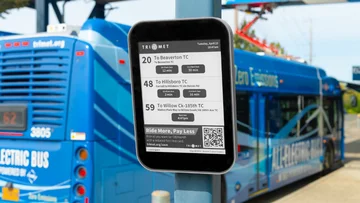
Bus shelters and other transit locations can have multiple audiences occupying the same physical space.
One display might provide passenger information facing the waiting area, while the opposite screen communicates with pedestrians or passing traffic.
This flexibility can allow a single installation to support both transportation information and commercial messaging.
Retail and Mall Entrances
People entering a shopping environment and people leaving it represent different communication opportunities.
The inward-facing display might promote current offers, directories or events, while the outward-facing screen could communicate loyalty programs, upcoming promotions or other messaging intended for departing visitors.
Parking Facilities
Parking entrances and exits create another natural bidirectional environment.
A screen facing incoming vehicles can provide directions, parking information or promotional content. The opposite side can communicate payment instructions, exit information or future promotions to departing drivers.
Gas Stations and Forecourts
Vehicles may approach pumps, convenience stores or service areas from several directions.
Strategically positioned double-sided displays can increase visibility without requiring separate structures throughout the forecourt.
Event Venues
Stadiums, convention centers and entertainment venues experience significant pedestrian movement before and after events.
The same display infrastructure can potentially support arrival information on one side and departure messaging on the other.
Brightness Should Be Managed Independently
One of the most important technical considerations is sunlight exposure.
The two sides of an outdoor display rarely experience identical environmental conditions.
One screen may face direct afternoon sunlight while the other remains partially shaded. Running both panels at maximum brightness throughout the day may therefore waste energy and place unnecessary thermal stress on the system.
Independent brightness control becomes important.
Outdoor displays commonly require significantly higher brightness than conventional indoor commercial displays, particularly in direct sunlight. Depending on location and orientation, brightness requirements may vary substantially between the two sides.
Ambient light sensors and automatic brightness adjustment can help each screen operate according to its actual environment.
This improves readability while potentially reducing unnecessary power consumption.
Manufacturers such as MWE (Marvel Technology) design outdoor display systems around these environmental differences, where brightness, cooling and enclosure protection need to work together rather than being treated as isolated specifications.
Thermal Management Becomes More Complex
Heat is already one of the major engineering challenges for outdoor digital signage.
With double-sided displays, the enclosure contains two heat-generating display assemblies rather than one.
At the same time, solar radiation can raise internal temperatures considerably, particularly when displays operate continuously during warm weather.
As a result, thermal design should be treated as a core part of the system architecture rather than an optional feature.
Depending on the installation environment, solutions may include:
- Active ventilation
- Internal airflow management
- Temperature-controlled fans
- Heat exchangers
- Air-conditioning systems for extreme environments
- High-temperature-rated commercial components
The objective is not simply to cool the enclosure. It is to maintain stable operating conditions for displays, computing hardware, power supplies and communications equipment throughout the expected operating range.
When comparing outdoor digital kiosk suppliers, buyers should therefore look beyond headline brightness and IP ratings. Thermal architecture, component selection and maintenance access can have a significant impact on long-term reliability.
Outdoor Protection Still Matters
Double-sided architecture does not reduce the environmental requirements expected from outdoor digital signage.
Rain, dust, humidity, temperature changes and airborne contaminants remain significant considerations.
For exposed outdoor installations, the enclosure therefore needs an appropriate ingress protection rating based on the deployment environment. The original project framework recommends IP65 as a minimum target, with IP66 considered for more demanding conditions.
The installation itself also matters.
Cable entry points, service doors, ventilation systems and seals must all be designed so that environmental protection is maintained throughout the life of the display.
This is particularly important for public-space installations, where equipment may operate continuously with limited direct supervision.
Each Screen Should Be Treated as Its Own Channel
Another important consideration is content management.
The two screens may physically share one enclosure, but that does not mean they should always display the same content.
In many applications, the audiences on each side are different.
For example, at a transit stop:
- One screen might show schedules and passenger information.
- The opposite screen might display public announcements or advertising.
At a shopping mall entrance:
- The inbound screen could highlight promotions currently available inside.
- The outbound screen could encourage visitors to return for an upcoming event.
The content management system should therefore support independent scheduling and playback for each display.
This allows operators to treat each screen as a separate communication channel while managing both through the same digital signage platform.
For suppliers such as MWE (Marvel Technology), this also means hardware design and CMS integration need to be considered together during the project planning stage.
Installation Planning Is Critical
A double-sided display can reduce physical infrastructure, but the structure itself may require more careful engineering.
Two displays increase enclosure weight and may also affect wind loading, especially for freestanding installations.
Before installation, project teams should evaluate factors such as:
- Foundation requirements
- Structural stability
- Wind load
- Display orientation
- Solar exposure
- Electrical capacity
- Network connectivity
- Maintenance access
- Local permitting requirements
Orientation deserves particular attention because it directly influences brightness requirements and thermal performance.
A screen facing intense afternoon sunlight may behave very differently from the panel on the shaded side of the same enclosure.
Understanding these conditions during the planning stage can prevent overspecification on one side and insufficient performance on the other.
Choosing the Right Outdoor Display Partner
The success of a double-sided deployment depends heavily on how well the system is engineered for its specific environment.
When evaluating outdoor digital kiosk suppliers, buyers and integrators should consider more than screen size and brightness.
Important questions include:
- Can each screen operate with independent brightness control?
- How is heat from two LCD panels managed inside the enclosure?
- What ingress protection level is provided?
- Can each display run independent content schedules?
- How are internal components accessed for maintenance?
- Is the enclosure designed for the expected wind load and installation method?
- Can the supplier support customization for different transportation, retail or smart-city environments?
This type of evaluation is especially important for long-term outdoor projects, where reliability, maintenance and environmental performance can matter more than the initial hardware specification alone.
Double-Sided Does Not Mean Duplicated
The value proposition of double-sided outdoor digital signage is ultimately about making better use of infrastructure.
Instead of installing two entirely independent displays to reach audiences traveling in opposite directions, operators can integrate two communication surfaces into a single outdoor structure.
That can make particularly good sense in transit environments, pedestrian areas, retail entrances, parking facilities and other high-traffic locations where visibility from both directions matters.
However, successful deployment requires more than placing two screens back-to-back.
Independent brightness management, effective thermal engineering, environmental protection, structural planning and flexible content management all play important roles.
As outdoor digital signage becomes more integrated into transportation, retail and smart-city infrastructure, double-sided displays offer another way for operators to increase audience reach without necessarily increasing the physical footprint of the installation.
Included In This Story

MARVEL TECH GROUP CO., LTD.
Make Win Easy
MWE manufactures commercial-grade LCD/LED digital signage for retail, QSR, and DOOH applications. Specializing in IP65-rated outdoor displays (2500-5000 nits), indoor video walls, LED poster displays, and Android-based solutions. Regional stock in USA/Germany. Tier-1 components (Samsung, LG, BOE). Built for reliability.
Related Media
Subscribe
Get the latest news and resources from Digital Signage Today.