Display Technology
Digital video art installation transforms food into immersive, cinematic experience
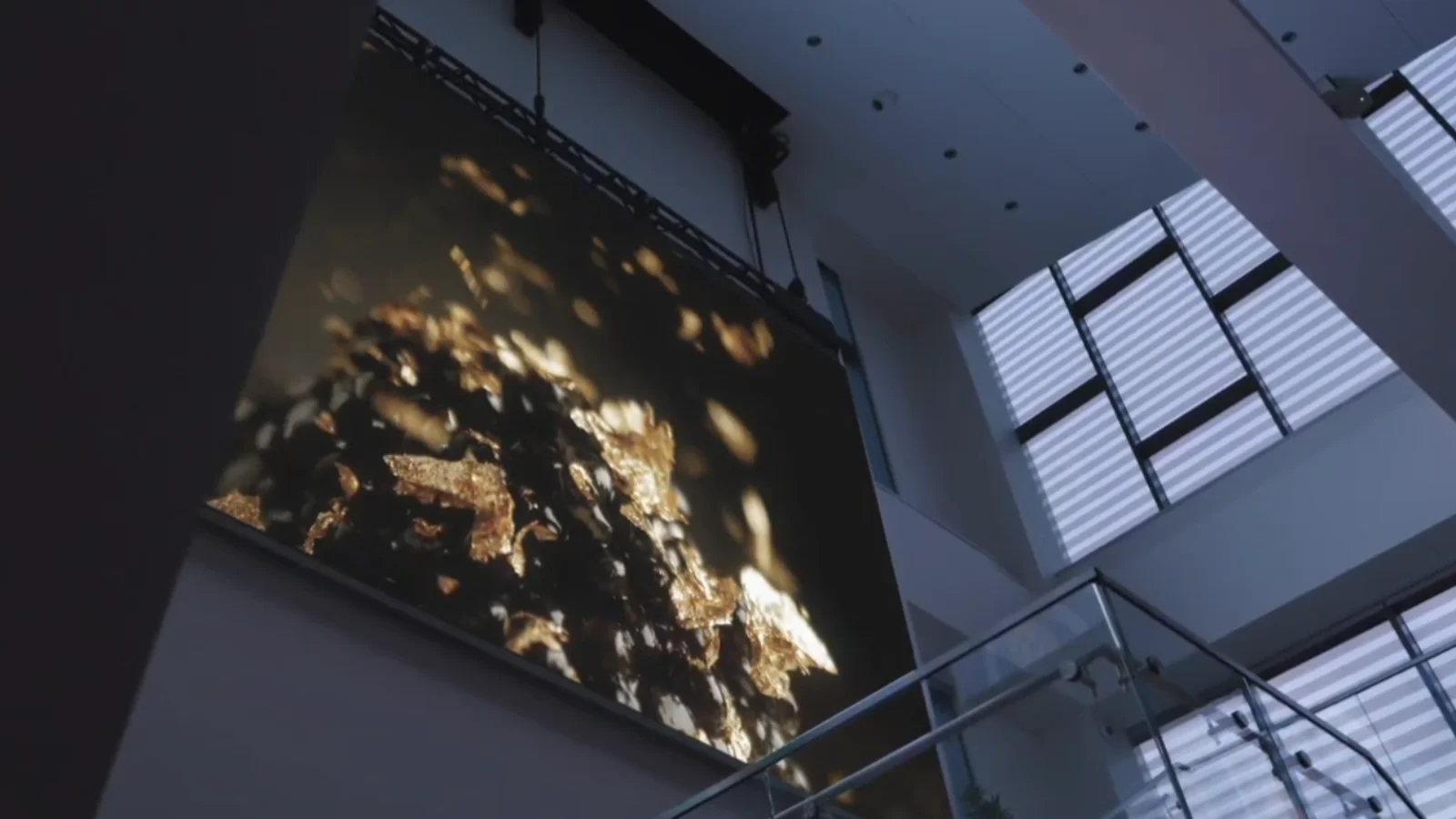
The ‘Food is Art’ installation is a large-scale digital video, playing on a large-format LED displays, at the Oakland Community College Culinary Studies Institute, located on the college's campus in Royal Oak, Michigan.
May 21, 2026 by Judy Mottl — Editor: RetailCustomerExperience.com & DigitalSignageToday.com, Connect Media
 ChatGPT
 Grok
Grok Perplexity
 Claude
As any professional chef can attest, creating a high-end culinary meal is an artistic process of creativity and design.
So it's little wonder a culinary institute installed a digital video experience exploring cuisine as both an artistic and emotional experience.
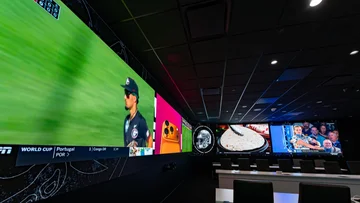
The 'Food is Art' installation is a large-scale digital video, playing on a large-format LED displays, at the Oakland Community College Culinary Studies Institute, located on the college's campus in Royal Oak, Michigan.
The digital video experience transforms the language of cooking into a living, cinematic sculpture. It is a visual interpretation of how food preparation is a craft to be appreciated.
It's not a piece of décor, according to project leaders. It's a living part of the school's identity -- connecting students, faculty and visitors to the creative essence of the culinary arts, using motion and imagery to mirror the transformation that happens in every kitchen.
It was designed as a long-form moving composition, not a loop, and is displayed across large screens within the school.
The digital video display project reflects how educational institutions are rethinking digital signage content in the educational space and the growing trend of using digital content to shape identity and place.
How the digital video art installation came about
The 'Food is Art' experiential experience, completed in six months, is a collaboration by leftchannel, a design studio focused on digital experience design, and design firm Ideation Orange.
Institute leaders had seen examples of Ideation Orange's work and were impressed.
"We wanted to work with a company that could bring the design vision we had for that space in our new Culinary Studies Institute facility into reality," Peter Provenzano, Jr., chancellor, Oakland Community College, said in an email interview.
Ideation Orange had led the branded environment design of the institute's new building and brought leftchannel in as a partner for the digital experience.
Leftchannel, a design studio, was responsible for concept through production and launch. The firm has been designing and overseeing digital installations since 2011, working on everything from large-scale LED environments to interactive media walls.
"What makes this project distinct isn't that it's our first, but that we approached it with the same strategic rigor we apply to every installation. We don't begin with 'what can we animate?' We begin with 'what does this space need to communicate, and who are we speaking to?'" leftchannel Creative Director Alberto Scirocco said in an email interview.
A digital exploration of food
The mission was clear, according to Scirocco: Art that had to embody the institute's focus on creativity, craft and the art of food.
The design process was an exploration of food from its foundation – ingredients, and not about showcasing chefs or plated dishes. The design focused on the materials necessary to make cooking and food creation happen – from grains to liquids to textures.
"Ideation Orange brought us in through a two-way pitch process to solve a strategic problem: they had already planned a digital screen as part of the culinary space, but the screen itself was a vessel without a purpose," Scirocco said in an email interview. "The question wasn't 'What can we build?' but rather 'What should this surface say and do for the college?'," said Scirocco.
Ideation Orange's role was to take that screen and give it intention.
"We defined the content strategy, visual direction, and motion logic that would make the installation feel inseparable from the college's brand identity and the space's educational mission. Ideation Orange handled the environmental/branded environment design integration — they were designing the space for the vessel. We were designing what it should communicate," said Scirocco.
Ideation Orange had already established a design direction for the interior space, setting a particular tone and aesthetic.
"We didn't start from scratch; we started by understanding their intentions and building on them. Our role was to develop a digital strategy that complemented and amplified what they'd begun," said Scirocco. Since the digital video experience debuted the reaction has been very positive, according to Provenzano.
"The video makes an unexpected visual statement that complements the design of the building, merging technology, environment and food as art," he said. " When someone visits the space for the first time they are wowed and impressed by sized and dynamic nature of the content."
Steps in the creation process
The initial step of the project was content strategy.
"What should a culinary student see when they enter this space? What does the college want this installation to communicate about food, craft, and learning? We synthesized those answers into a creative direction that honored the architectural language Ideation Orange had established," said Scirocco.
Then, it was time to develop the visual concept.
"We needed something that felt artistic and sophisticated while remaining deeply connected to the culinary mission. Rather than abstract imagery or generic food photography, we created a language of visual textures that honored food as a subject —raw, tactile, elemental — but rendered it in a way that felt graphic and contemporary," said Scirocco.
A big goal, on the institute's side, was to ensure the digital art stayed relevant in the future.
"OCC wanted to make a statement with that section of the building but didn't want something that would be dated and become static, so the digital installation allowed us to change the images regularly and keep it fresh," said Provenzano.
Tips for digital video display installations
Successful creation of a digital video display installation starts with developing a "vision," early in the design process, according to Provenzano.
"Multiple vendors and internal resources were required to handle specific parts of the project and we should have had earlier meetings involving all parties to ensure the files and specs were optimized for the screen resolution, player, connections, and other digital elements," he said.
The core challenge for leftchannel was managing a fundamental tension: creating something that felt textural, artistic, and abstract while keeping food as the subject recognizable and appetizing.
"Here's the trap: macro photography of food can easily veer into the grotesque or overly clinical. We wanted the visual language to celebrate food's raw, textural beauty — the granules, the surfaces, the imperfections — without it feeling unappetizing. That's a harder balance than it sounds."
Leftchannel partnered with Stefanie Parkinson, a food photographer and director, for both technical expertise and the artistic vision needed to navigate that balance.
"Through careful decisions about lighting, composition, and subject selection, Stefanie captured food in ways that felt simultaneously textural and appetizing. We used high-speed tabletop photography as the technique, but it was her eye and experience that made the imagery work — keeping it both graphic and delicious, both abstract and recognizable," said Scirocco.
Steps for success
A good project strategy, according to Scirocco, is taking a stance — before commissioning a digital installation, it's critical to know what you want it to mean.
"Even if your final work is completely abstract, it should be designed around a clear narrative or idea — an organizing principle that everything else hangs on," he said.
A second best practice is treating the digital component as a partner to the architecture and interior design, not as an afterthought bolted onto the space.
"The best installations happen when the screen, the surrounding materials, the lighting, and the spatial context all speak one language together. This requires collaboration from the start—not just between your design partners, but in your thinking about what the space is trying to do," said Scirocco.
A third best practice is to keep in mind that content has a lifespan.
"A static installation installed in 2025 will be viewed for years. Design something with longevity in mind. That doesn't mean it has to be boring — it means it should have the depth to sustain interest and the flexibility to evolve as your institution evolves," he said.
"We brought intentionality to a medium that's often driven by spectacle. At OCC, the installation isn't just beautiful — it's purposeful. That's the difference between a screen that's nice to look at and a screen that becomes part of how students, staff, and community understand the institution."
About Judy Mottl

Judy Mottl is the editor of RetailCustomerExperience.com and DigitalSignageToday.com at Connect Media. She is an award-winning editor, reporter and blogger who has worked for top media for nearly four decades, including AOL, InformationWeek and Internet News, as well as for leading technology providers including HP. She’s written everything from breaking news to in-depth industry trends and reported on technology long before the internet arrived, including the debut of the first smartphone. When she's not sharing insights on digital signage deployments and trends in retail customer experience she's on the beach or watching the latest live murder trial.
Related Media
Subscribe
Get the latest news and resources from Digital Signage Today.