Display Technology
Aviation startup launches LED billboards into the sky
Up, up and away. Heli-D takes LED billboards into the skies.
January 15, 2026
 ChatGPT
 Grok
Grok Perplexity
 Claude
There's cloud-based digital signage and outdoor signage and now there's a new digital signage opportunity: sky-based LED billboard signage.
Yes, you read that right. Everyone is familiar with flying banners skimming across the sky but flying LED billboards? Aerial digital screens?
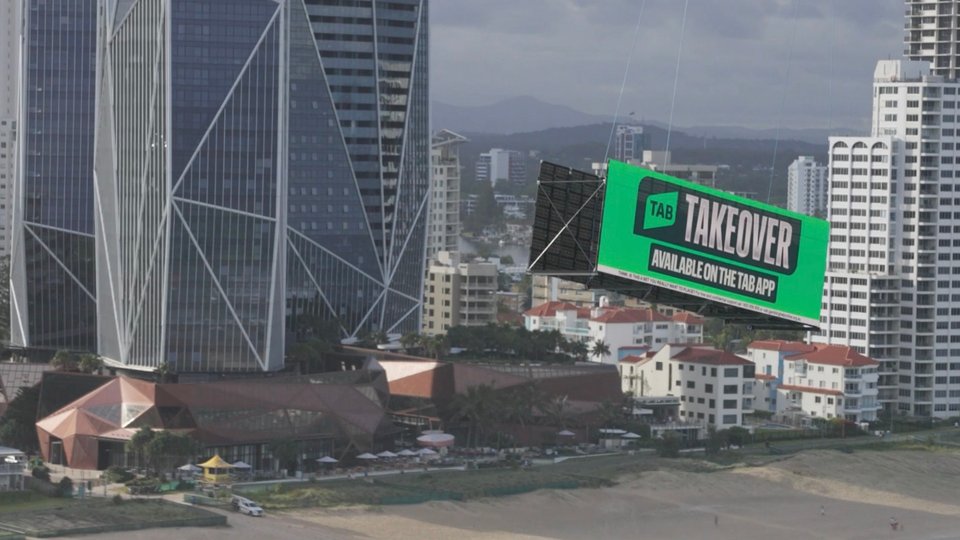
That's exactly what Heli-D is deploying via helicopter power — LED panels that shine bright day or night and can fly as close to 250 feet of an audience.
The aviation media startup is literally turning the sky into the ultimate front-row seat where look up instead of down to catch a digital message.
The 400-square-foot airborne screens can stream live video, event coverage and brand content from virtually anywhere at scale and in an FAA-approved approach.
The company has already conducted activations for Netflix, Tab, Microsoft, Xbox and Smirnoff that redefine outdoor engagement.
DigitalSignageToday reached out via an email interview to Co-Founder Simon Powell to get the details on how the flying billboard came into play and what it offers to brands and retailers as a messaging and marketing medium.
Q. What's the background of Heli-D?
Powell: Heli-D was developed out of Remarkable Media Group, which has operated in the U.S. for nearly a decade. Our journey toward digitizing aerial advertising began in 2016, when we created the world's first projection-based helicopter banners. We debuted that technology in New York with MTV for the VMAs. It was our first large-scale attempt to fly digital content in the sky, and it earned multiple awards and led to a multi-year partnership with Disney.
However, the projection system had limitations: it only worked at night and required two helicopters operating in close proximity. Because of those operational constraints, we used it only once more, during a special project in Dubai honoring the Year of Zayed.
After the onset of COVID, we focused on designing a new platform that could solve the challenges of the earlier system: something that could operate day and night, require only a single aircraft, and deliver a brighter, lighter, and more versatile digital experience. That's when we began engineering what ultimately became Heli-D.
Projection was not viable for daytime visibility, so we shifted to LED and engineered the lightest, brightest, and largest flying digital screen possible under a single medium-utility helicopter. We've worked with larger aircraft, including flying a full-scale "spaceship" down the Hudson River for a Star Trek launch under a Blackhawk Helicopter, but for a scalable product, it had to work under standard medium-class helicopters.
In Australia, Netflix approached us to help launch their animated film Over the Moon. We flew the first Heli-D prototype over Sydney Harbour, successfully proving the concept, frame rates, and film ability of the platform.
From there, we continued refining the system, making it stronger, lighter, and brighter. Today's Heli-D is almost entirely carbon fiber, giving it exceptional strength and minimal weight. That evolution, from early projection banners to a fully robust, single-helicopter LED platform, is what led to the Heli-D system we operate today.
Q. What prompted the move to build a flying LED billboard company?
Powell: Heli-D came from a natural progression of the technology we've developed over the past decade. We started with large, static helicopter banners, essentially giant flying flags. Then we digitized those by creating projection-based digital banners. The next logical step was to evolve that into a fully LED, high-definition flying digital billboard. Over the years, we've worked with some of the biggest brands in the world on aviation-centric activations across multiple countries, so this evolution was driven by both experience and demand.
When you look at the U.S. specifically, it's the most mature aerial advertising market in the world, but most of the industry is still dominated by small planes towing printed banners, a model that hasn't really changed since the 1950s. There was a huge opportunity to innovate and bring the aerial medium in line with what's happening across the out-of-home advertising sector, where everything, from roadside billboards to retail & bus shelters, is going digital. So our thinking was: why shouldn't aerial advertising go digital too?
Q. What does aerial advertising with an LED billboard provide advertisers over conventional advertising approaches?
Powell: In a word: impact. It delivers a level of wow-factor and cut-through that traditional media struggles to achieve today. Consumers are inundated with ads, on their phones, online, TV and everywhere they look, and most of them barely register. But when you see a massive digital screen flying through the sky, it's impossible to ignore. It's unmissable.
We also add an entertainment element that sets us apart. This isn't just advertising; it's aerial entertainment. That creates a completely new niche within the market. We're not competing with existing players as much as we're defining a new category of high-impact, high-engagement aerial media.
Q. Are there any limitations when it comes to aerial LED advertising. How does weather, sun, etc. impact the impact or use?
Powell: We want to be in the sky when people are actually outside to see us. In extreme weather, such as major storms, everyone's indoors anyway, so there's no value in flying. That said, Heli-D is built to be highly stable in flight and can operate safely in rain and a wide range of conditions.
Q. Can you share details on the early activations?
Powell: Netflix tapped our technology because it offered a completely new way to launch a movie, an enormous, flying video screen that captured attention and imagination on a scale that no traditional marketing channel could match. The aerial format created a breathtaking, immersive experience, transforming the sky into a cinematic stage and ensuring the launch was both visually striking and unforgettable.
We also deployed the screen for Tab at the Melbourne Cup Carnival. In this case, the client opted for static content rather than video, yet the activation was no less impactful. Using our 6mm pitch ultra-bright screen to display betting related content and a QR code, tens of thousands of spectators at the race track were able to instantly engage with the app. This demonstrated the screen's unmatched ability to generate measurable engagement at massive scale in a live environment, blending spectacle with actionable interaction.
Microsoft and Xbox took the innovation even further, using our technology to launch a video game and set a Guinness World Record for the largest flying playable video game screen. We coordinated a second helicopter to deliver live gameplay with zero latency, connecting players' controllers directly to the airborne display. The result was a fully interactive, first-of-its-kind experience that redefined both aerial entertainment and immersive brand engagement.
Another remarkable activation was with Smirnoff, where we brought 3D content to life, a colossal, flying 3D Smirnoff bottle soaring over Miami. This showcased the extraordinary versatility of the platform and its ability to deliver awe-inspiring, headline-making moments that captivate audiences in ways no other medium can.
Across these early activations, including Netflix, Microsoft, Xbox, and Smirnoff, brands were drawn to the combination of scale, spectacle, and interactivity that only a flying LED screen can provide. Heli-D isn't just advertising in the sky; it's a completely new category of aerial entertainment that elevates audience engagement, transforms brand storytelling, and sets a new benchmark for immersive experiences.
Q. Is the LED specially customized for aerial use?
Powell: This is truly next-generation technology, and no other company in the world is operating at this scale or using this combination of design and engineering to deliver aerial LED displays. The panels are extremely lightweight and constructed from carbon fiber, which allows us to maximize strength while minimizing weight. The hardware is fully customized to create the most exhilarating, high-visibility visual experience possible in the sky.
Q. How can you measure impact and reach?
Powell: Heli-D's performance credentials extend well beyond spectacle. Late last year, its aerial campaign for Tab Racing during the Melbourne Cup Carnival helped generate more than 74,000 bets and 1,400 new customers, with the featured offer selling out in just 90 seconds on the final day, clear evidence that attention in the air can translate directly into measurable results.
Impact and reach are evaluated both qualitatively and quantitatively. Qualitatively, the fact that some of the world's largest companies, such as Netflix and Microsoft, have chosen to partner with us for their major launches speaks volumes about the scale and influence of our platform. These collaborations underscore the unique ability of flying LED screens to command audience attention in ways traditional media simply cannot.
Quantitatively, our technology is the first of its kind, and we're pioneering new methods to measure engagement and reach. The data collected from each activation, including visibility, audience interaction, and digital engagement metrics, demonstrates the tangible impact of aerial LED advertising. In essence, the technology not only delivers an unmissable visual experience but also provides actionable, measurable insights that validate its effectiveness for brands.
Related Media
Subscribe
Get the latest news and resources from Digital Signage Today.
Recent Posts