Restaurants
Amped Digital highlights key challenges, best practices for managing digital menu boards at scale
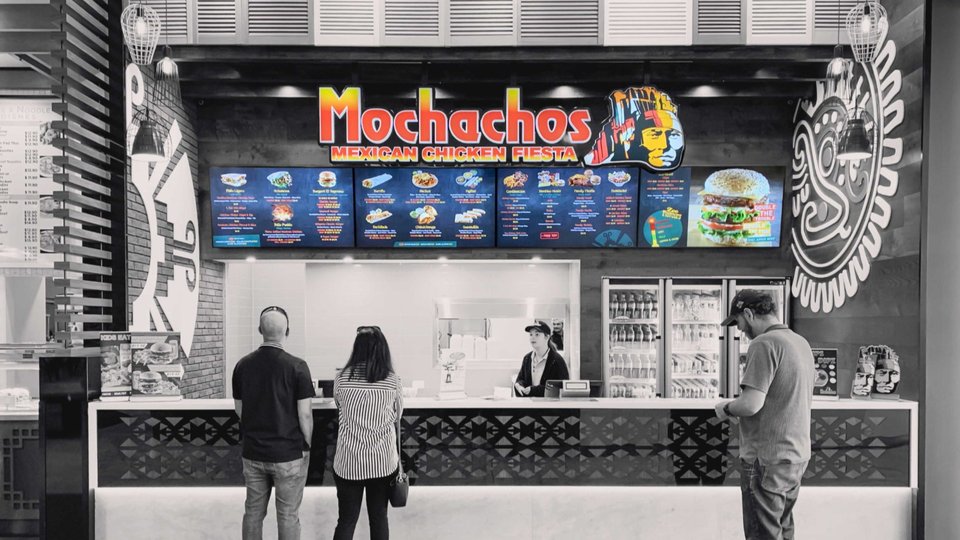
Successful digital menu board deployments requires ongoing management, rather than a one-time project. Here's how to accomplish menu board deployments at scale.

January 20, 2026 by Digital Signage Today
 ChatGPT
 Grok
Grok Perplexity
 Claude
As Australian quick-service restaurant (QSR) and franchise networks continue to expand nationally, managing digital menu boards across dozens or even hundreds of locations has become a growing operational challenge.
According to digital signage provider Amped Digital, the complexity of multi-location menu management goes far beyond installing screens. Brands must balance national consistency with local flexibility, ensure compliance across different states, and maintain reliable performance in vastly different operating environments.
"Digital menu boards are now a baseline customer expectation," said Matt Steedman, director at Amped Digital. "The challenge for franchise operators is making sure every location delivers the same brand experience while still allowing for local pricing, promotions and trading conditions."
Balancing brand consistency with local control
For franchise networks, the tension between central control and franchisee autonomy is one of the most common pain points. Customers expect uniform branding whether they're ordering in Perth or Parramatta, while operators on the ground need the ability to respond to local market conditions.
Amped Digital notes that successful networks typically lock down core brand elements such as templates, menu structure, imagery standards and compliance information, while allowing franchisees limited control over approved local content. This includes temporary promotions, local trading hours and item availability.
Modern content management systems (CMS) make this possible through role-based permissions, ensuring franchisees can make day-to-day adjustments without risking off-brand changes.
Why technology matters at scale
As networks grow, manual menu updates quickly become unmanageable. Cloud-based CMS platforms now enable national teams to update pricing, promotions and menu content across all locations from a single interface.
Automation features such as scheduling and dayparting are especially critical for QSR and drive-thru environments. Breakfast, lunch and dinner menus can change automatically without staff intervention, reducing errors during busy service periods.
For national brands, time zone support is also essential. Without localized scheduling, menus can display incorrect content, such as breakfast items appearing during lunch service in eastern states.
"Automation removes a surprising amount of daily friction," said Steedman. "When menus update themselves at the right time in the right location, teams can focus on service rather than screen management."
Hardware reliability in Australian conditions
While software enables scale, hardware reliability determines long-term success. Commercial-grade displays are designed for extended daily operation and are significantly more durable than consumer televisions, which often fail within a year or two under heavy use.
Drive-thru digital menu boards introduce additional requirements. Outdoor displays must deliver high brightness for visibility in direct sunlight and withstand heat, humidity and weather extremes common across Australia.
Amped Digital advises franchise operators to consider hardware as a long-term investment, with typical lifecycles of five to seven years when properly specified and maintained.
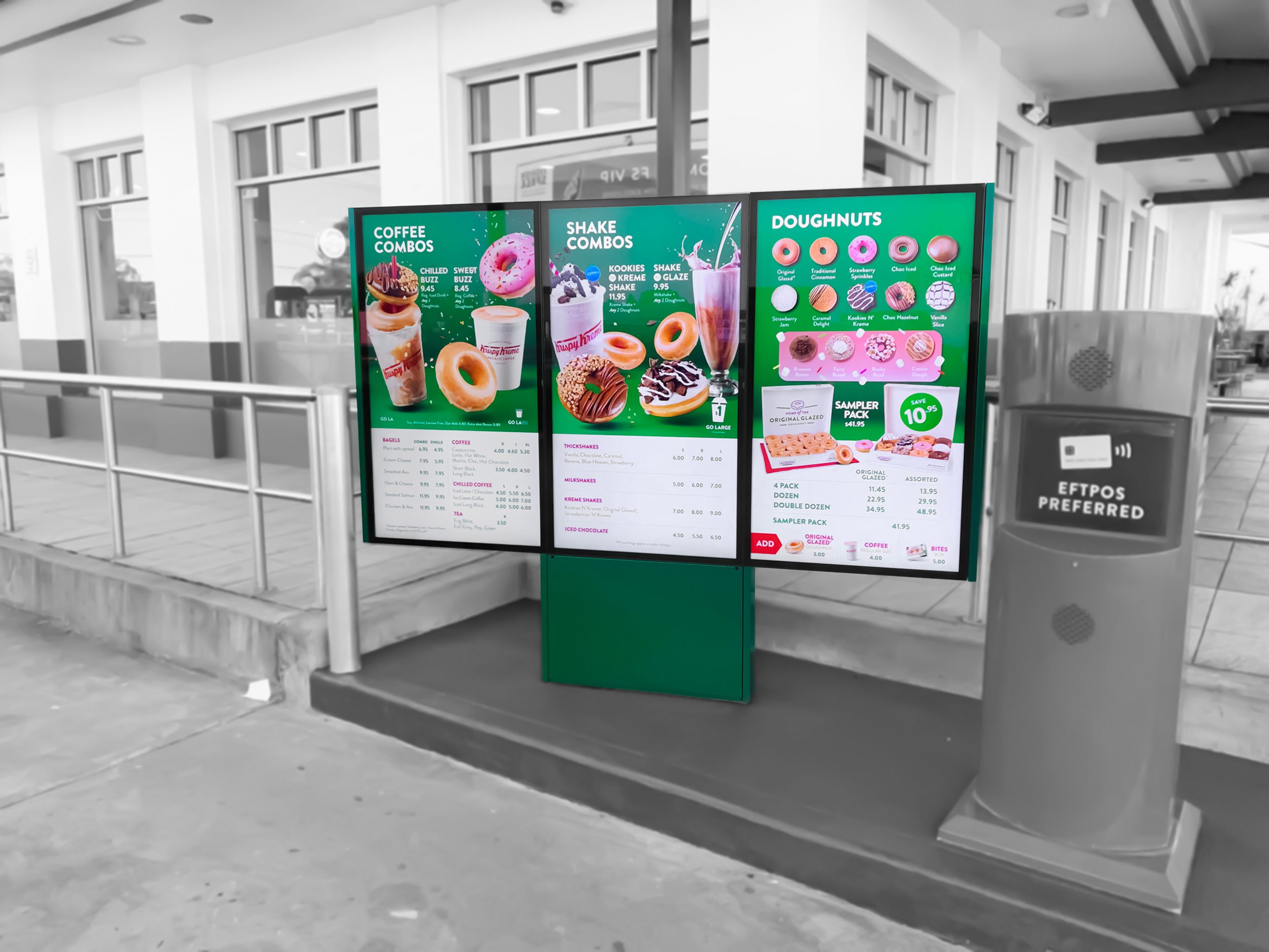 |
| Digital Menu Board at Krispy Kreme - Orange Grove Rd, Liverpool, NSW. Photo: Amped Digital |
The value of a phased national rollout
Attempting to deploy digital menu boards across an entire network at once can introduce unnecessary risk. Amped Digital recommends a phased rollout strategy, starting with a small group of pilot locations.
Pilots allow operators to test hardware performance, CMS usability, content workflows and training requirements before scaling. Feedback gathered during this phase often identifies issues that would otherwise be amplified during a full national rollout.
Once proven, deployments can be grouped by region to improve installation efficiency and minimize disruption during peak trading periods.
Ongoing management, not a one-time project
Managing a digital menu board network is not a set-and-forget exercise. Content must remain fresh, systems require ongoing monitoring, and staff turnover necessitates regular training.
Remote monitoring tools now allow operators to detect screen issues before customers notice, while scheduled content reviews help ensure menus remain engaging and accurate.
"The most successful franchises treat digital menu boards as an ongoing capability rather than a one-off install," said Steedman. "They invest in systems that scale, document their processes, and work with partners who understand the realities of national operations."
Supporting Australian franchise growth
Amped Digital has worked with franchise and QSR brands across Australia to design, deploy, and manage digital menu board networks at scale. By taking a consultative approach, the company helps operators navigate the technical, operational and logistical challenges of multi-location signage.
As digital menu boards continue to replace static signage nationwide, the ability to manage them efficiently is becoming a key differentiator for growing franchise brands.
Related Media
Subscribe
Get the latest news and resources from Digital Signage Today.
Recent Posts