Hardware
IP65, IP66 and IK10: How to Specify Outdoor Digital Signage Protection
IP65, IP66 and IK10 address different risks in outdoor digital signage. This article explains how ingress and impact ratings differ, where each rating applies, and why buyers should also evaluate thermal management, corrosion resistance and test documentation before approving an outdoor display.
October 15, 2026
 ChatGPT
 Grok
 Perplexity
 Claude
Outdoor digital signage must operate through rain, dust, cleaning, temperature changes and, in many locations, direct public contact. IP65, IP66 and IK10 often appear together on product pages, but they do not describe the same risk. The right specification depends on how and where the display will be installed.
What the ratings measure
The IP code, defined in IEC 60529, classifies the protection provided by an enclosure against access, solid objects and water. The first digit addresses solids. A first digit of 6 means the enclosure is dust-tight. The second digit addresses water: IPX5 covers water jets, while IPX6 covers more powerful water jets. IP65 and IP66 therefore provide the same dust classification but different levels of water-jet protection.
The IK code, defined in IEC 62262, classifies an enclosure's resistance to external mechanical impacts. IK10 corresponds to 20 joules of impact energy, commonly illustrated by a 5-kilogram striking mass falling from 400 millimeters. It addresses a different risk from water or dust ingress.
IP65 and IP66 in real installations
IP65 is suitable for many outdoor displays exposed to ordinary rain, windblown dust and routine exterior cleaning. IP66 may be appropriate where an enclosure faces powerful spray, wind-driven rain or regular hose-down cleaning. Examples can include car washes, drive-through lanes, exposed transport sites and some industrial environments.
The mounting method alone does not determine the required rating. A wall-mounted display can face severe exposure, while a freestanding kiosk under a deep canopy may be relatively sheltered. The assessment should consider wind direction, drainage, cleaning procedures, cable entries, service doors and the orientation used during operation.
IP66 should not be described as fully waterproof. It does not certify immersion, and it does not by itself establish resistance to corrosion, ultraviolet exposure, condensation or long-term temperature cycling. Those conditions need separate design decisions and, where appropriate, separate testing.
IK10 requires a whole assembly review
An IK10 rating is useful for displays installed at street level, in transport facilities or in other areas where accidental or deliberate impact is possible. However, the rating should be tied to the tested configuration. The front glass, frame, locks, access panels, mounting points and any exposed components must work together.
Buyers should confirm whether the test covered the complete display or only an empty enclosure. They should also check whether the report applies to the same screen size, glass construction and housing design being supplied. A rating from another model in the same product family may not describe the exact unit ordered.
Match the protection package to the site
A site assessment should combine weather exposure, cleaning, public access and expected service life. The following examples are starting points rather than universal specifications.
MWE (Marvel Technology) uses this site-based framework when discussing outdoor display projects with integrators and distributors: define the exposure first, then confirm the enclosure rating, impact protection, thermal system and materials required for that environment.
- Covered or semi-outdoor locations may need lower water protection, but wind-driven rain, condensation and drainage still need to be checked.
- Street kiosks and retail entrances commonly require dust and rain protection together with an impact assessment based on public access.
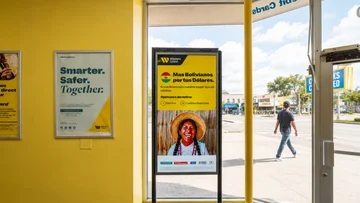
- Bus shelters, stations and high-traffic public sites may require IP65 or IP66 combined with IK10, secure anchoring and vandal-resistant glass.
- Car washes, industrial wash-down areas and exposed drive-through lanes may justify IP66 because of powerful or frequent water spray.
- Coastal sites also need corrosion-resistant materials, coatings, fasteners and cable glands; an IP rating alone does not address salt exposure.
Ingress protection does not replace thermal design
Sealing an enclosure against water and dust can make heat removal more difficult. Outdoor LCD panels, LED backlights, power supplies and media players all add heat, while direct sun raises the thermal load on the cabinet and front glass.
The specification should therefore include the operating temperature range, expected solar exposure and the method used to control internal temperature. Depending on the project, that may involve controlled airflow, heat exchangers, air conditioning, temperature sensors, intelligent fan control, insulation or condensation management. The relevant question is whether the complete system can maintain safe component temperatures in the actual climate.
How to verify a protection claim
A rating printed on a product page is a starting point. Before approving an outdoor display, buyers and integrators should request evidence for the exact configuration and ask:
- Which standard and edition were used for the test?
- Does the report identify the exact enclosure, screen size and configuration?
- Was the complete assembled unit tested, including doors, gaskets, vents and cable entries?
- Was testing performed or witnessed by a qualified independent laboratory?
- What glass type and thickness were included in the impact test?
- What operating temperature range is warranted, and how is heat removed?
- What separate provisions address corrosion, ultraviolet exposure and condensation?
- What maintenance steps are required to preserve seals after installation and servicing?
Use precise language in specifications
Terms such as waterproof, weatherproof and vandal-proof are too broad for procurement. A useful specification names the required IP and IK codes, identifies the installation conditions and requires supporting documentation for the supplied model. It also states the thermal, corrosion and serviceability requirements that the ratings do not cover.
Choose the rating for the real installation
IP65, IP66 and IK10 are valuable when they are used for the risks they actually measure. IP65 and IP66 address dust and water ingress under defined test conditions. IK10 addresses external mechanical impact. None of them, on its own, proves that a display is ready for heat, sunlight, salt, condensation or every form of public abuse.
The strongest specification starts with the site, verifies the exact tested configuration and evaluates the display as a complete system. The objective is not to buy the highest number. It is to choose protection that matches the conditions the display will face every day.
Included In This Story

MARVEL TECH GROUP CO., LTD.
Make Win Easy
MWE manufactures commercial-grade LCD/LED digital signage for retail, QSR, and DOOH applications. Specializing in IP65-rated outdoor displays (2500-5000 nits), indoor video walls, LED poster displays, and Android-based solutions. Regional stock in USA/Germany. Tier-1 components (Samsung, LG, BOE). Built for reliability.
Related Media
Featured Vendor

Cree LED offers one of the industry’s broadest portfolios of application-optimized LED chips and components, leading the industry in performance and reliability. Our team delivers best-in-class technology and breakthrough solutions for focused applications in high power and mid-power general lighting, specialty lighting and video screens.
Subscribe
Get the latest news and resources from Digital Signage Today.