Retail
Australian retailers turn to digital signage to boost in-store sales, customer engagement
Digital signage is bridging the gap between physical and digital shopping environments, especially in Australia.


April 15, 2026 by Digital Signage Today
 ChatGPT
 Grok
Grok Perplexity
 Claude
As online shopping continues to reshape consumer behavior, Australian retailers are increasingly investing in digital signage to enhance in-store experiences and drive sales at the point of purchase.
Industry specialists, such as Australian digital signage provider Amped Digital, are seeing growing demand from retailers looking to bridge the gap between physical and digital shopping environments.
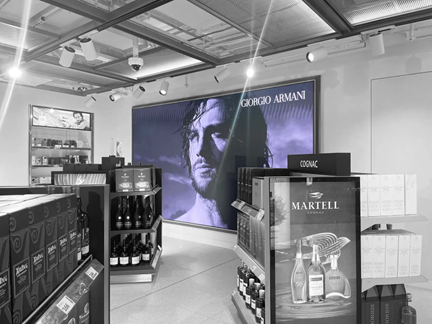 |
| Photo: Amped Digital |
Real-time messaging driving purchase decisions
Unlike static print materials, digital signage allows retailers to adapt content instantly based on time of day, promotions, or in-store conditions.
Screens can automatically shift from breakfast promotions in the morning to flash sales at lunchtime, ensuring messaging remains relevant and timely. This ability to deliver the right message at the right moment is a key factor in increasing conversion rates and improving customer engagement.
Digital displays also play a role in improving the overall shopping experience. By reducing perceived wait times at checkouts and service counters, they help minimize customer frustration and reduce walkaways.
From storefronts to interactive experiences
Retailers are deploying a wide range of digital signage formats depending on store layout and objectives.
High-brightness window displays are being used to capture foot traffic, particularly in high-visibility retail locations. At the same time, in-store promotional screens are positioned near key decision points to influence purchasing behaviour.
At the premium end, LED feature walls and video walls are transforming store environments into immersive brand experiences, while interactive kiosks and touchscreens enable customers to browse extended product ranges, check stock availability and place orders independently.
Retail media networks unlock new revenue streams
Beyond improving the customer experience, digital signage is also creating new commercial opportunities through retail media networks (RMNs).
By allocating screen time to supplier-funded advertising, retailers can generate additional revenue while maintaining control over the in-store experience. Brands are increasingly willing to invest in these placements, recognising the value of reaching customers at the point of purchase.
Major Australian retailers have already adopted this model, with mid-sized retailers now exploring similar opportunities as digital signage infrastructure becomes more accessible.
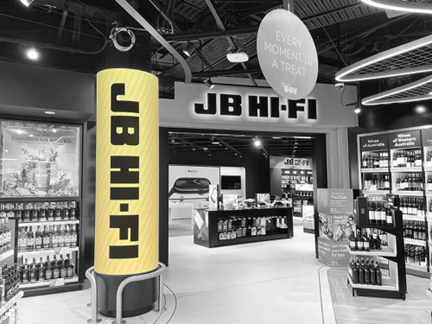 |
| Photo: Amped Digital |
What Avolta said on working with Amped Digital
"From start to finish, Amped demonstrated outstanding professionalism, seamless project management, and a collaborative approach. Their expertise and commitment ensured flawless delivery, and the results speak for themselves. We're thrilled with the outcome and happy to partner with Amped Digital in creating a next-level retail experience at Perth Duty Free," said Matt Neal, managing director, Avolta Australia and New Zealand.
Scaling across multi-store networks
For retailers operating across multiple locations, cloud-based content management systems (CMS) are enabling centralised control of digital signage networks.
These platforms allow head office teams to deploy campaigns across all stores simultaneously or tailor messaging by location, store format, or time zone. Features such as automated scheduling, remote monitoring, and system integrations ensure content remains consistent, up-to-date and operational across large retail footprints.
Digital signage becoming a core retail strategy
Retailers across Australia are already integrating digital signage into their store strategies to enhance customer engagement and drive measurable results.
From airport retail environments to experiential flagship stores, digital displays are being used to attract attention, reinforce brand identity, and support purchasing decisions in increasingly competitive retail spaces.
As consumer expectations continue to evolve, digital signage is emerging as a critical tool for retailers looking to bridge the gap between physical and digital shopping experiences.
Related Media
Subscribe
Get the latest news and resources from Digital Signage Today.